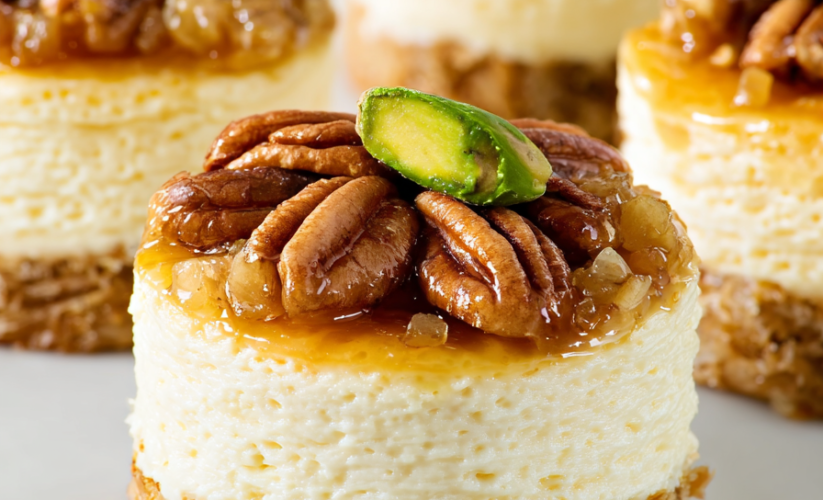
Mini Baklava Cheesecakes

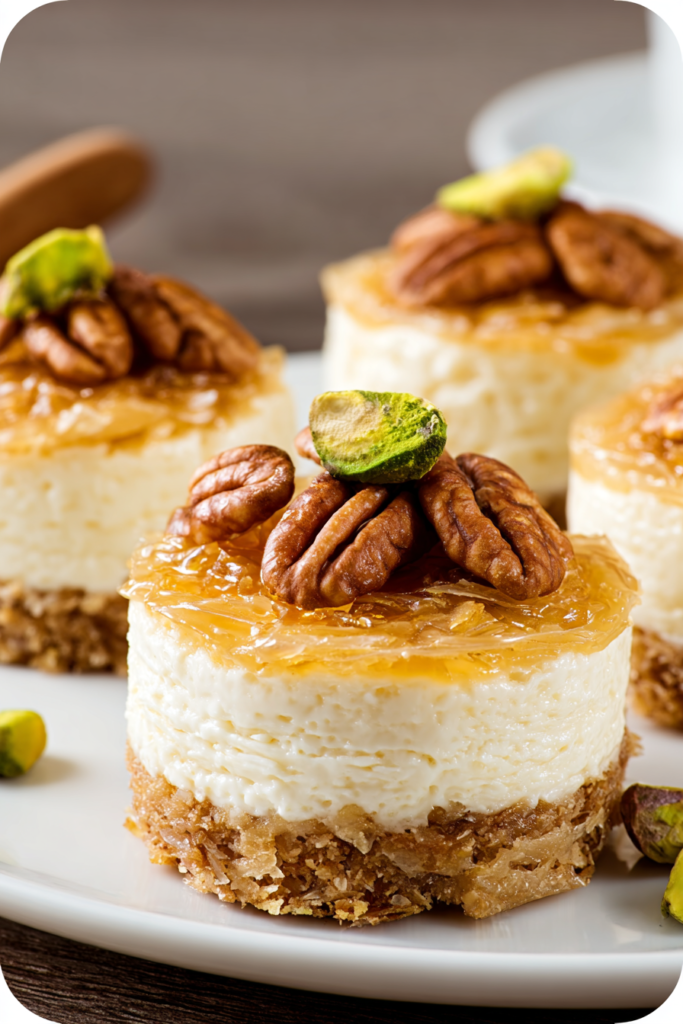
These individual-sized desserts represent a delightful fusion of two beloved Mediterranean treats—creamy, tangy cheesecake and flaky, honey-soaked baklava—transformed into elegant single servings perfect for dinner parties, special occasions, or sophisticated dessert presentations. The recipe combines a phyllo dough crust, silky cream cheese filling studded with walnuts, topped with a warm honey-cinnamon glaze that evokes baklava’s signature sweetness and spice. With their impressive appearance, complex flavor profile, and surprisingly manageable preparation, these miniature cheesecakes prove that restaurant-quality desserts can be achieved at home without requiring advanced pastry techniques or specialized equipment.
Why You’ll Love This Recipe
- Elegant Individual Servings – Rather than slicing a large cheesecake, these muffin-tin-sized portions offer impressive presentation with no cutting required, perfect for entertaining or meal prep.
- Fusion Flavor Innovation – The combination of creamy cheesecake with baklava’s signature honey, walnuts, and cinnamon creates a sophisticated flavor profile that surprises and delights sophisticated palates.
- Make-Ahead Excellence – These cheesecakes actually improve as they chill, allowing you to prepare days in advance and refrigerate until serving, eliminating last-minute dessert stress.
- Manageable Portion Control – Individual servings naturally prevent overeating while the rich, decadent flavors mean each small cake feels like a satisfying indulgence.
- Impressive Yet Achievable – Despite their gourmet appearance and complex flavors, the preparation involves straightforward steps accessible to home bakers without professional pastry training.
- Customizable Spicing – The honey-cinnamon topping can be adjusted based on preference for more or less honey, additional spices like cardamom or nutmeg, or even pistachio nuts as alternatives.
Ingredients You’ll Need
For the Phyllo Crust
- 1 cup phyllo dough, finely chopped – Creates the crispy, flaky textured crust that provides structural contrast to the creamy filling; approximately 4-5 sheets phyllo dough chopped into small pieces, about 1/8-inch size.
- 1/4 cup melted butter – Binds the phyllo pieces together and creates the crunchy, golden texture characteristic of baklava; use clarified butter for purer flavor if available.
For the Cheesecake Filling
- 16 oz cream cheese, softened – Provides the creamy, tangy base that defines cheesecake; must be at room temperature for smooth mixing without lumps.
- 1/2 cup granulated sugar – Sweetens the filling while contributing to creamy texture through its hygroscopic properties that retain moisture.
- 2 large eggs – Bind ingredients together while adding structure through protein; room temperature eggs incorporate more smoothly and create lighter texture.
- 1 tsp vanilla extract – Enhances and rounds out all flavors while adding aromatic warmth; pure vanilla extract delivers superior flavor compared to imitation varieties.
For the Filling and Topping Mix-in
- 1/2 cup chopped walnuts – Provides nutty richness and textural contrast; divide in half, with half folded into the filling and half reserved for the honey topping to maximize walnut presence.
- 1/4 cup honey – Creates the signature baklava sweetness and glossy topping; use raw honey for richer flavor or standard processed honey for milder taste.
- 1 tsp ground cinnamon – Delivers the warm, spicy, aromatic character essential to baklava’s identity; use Ceylon cinnamon for delicate flavor or Cassia for more intense profile.
Step-by-Step Instructions
Prepare the Baking Vessel
Preheat your oven to 325°F (165°C), positioning the rack in the center for even heat distribution. Line a 12-cup muffin tin with paper baking liners, ensuring complete coverage of the cups for easy removal and to prevent sticking.
Create the Phyllo Crust
In a small bowl, combine the finely chopped phyllo dough and melted butter, stirring with a fork until the phyllo pieces are evenly coated and moistened. Divide the mixture evenly among the 12 muffin cups, using approximately 1 tablespoon per cup, and press gently into the bottom and slightly up the sides of each cup to form a thin, even crust. Set the muffin tin aside while preparing the filling.
Prepare the Cheesecake Batter
In a medium mixing bowl, combine the softened cream cheese and granulated sugar. Using an electric mixer on medium speed or a wooden spoon for vigorous manual mixing, beat the mixture for 2-3 minutes until completely smooth, light, and creamy with no visible lumps or streaks. Add the large eggs one at a time, beating on low speed after each addition for about 30 seconds, ensuring each egg is fully incorporated before adding the next. This gradual incorporation prevents overmixing, which can create dense, heavy texture. Stir in the vanilla extract, then gently fold in half of the chopped walnuts (approximately 1/4 cup) using a spatula with folding motions rather than vigorous stirring to maintain the airy texture.
Fill and Bake the Cheesecakes
Divide the cheesecake batter evenly among the 12 phyllo-crusted muffin cups, filling each approximately 3/4 full. Place the muffin tin on a larger baking sheet (for easier handling and to catch any drips) and transfer to the preheated 325°F oven. Bake for 20-25 minutes, until the filling is set around the edges but still slightly jiggly in the very center of each cup—this indicates perfect doneness, as the residual heat will continue cooking the center during cooling. The tops should appear creamy and light golden rather than browned. Remove from the oven and allow the cheesecakes to cool completely in the muffin tin for at least 30 minutes.
Prepare the Honey Topping
While the cheesecakes cool, combine the honey, ground cinnamon, and remaining chopped walnuts (approximately 1/4 cup) in a small bowl, stirring until well combined and the cinnamon is evenly distributed throughout the honey. The mixture should be thick yet pourable, allowing you to drizzle it over the cooled cheesecakes.
Apply the Honey Glaze
Once the cheesecakes are completely cooled, gently drizzle approximately 1 teaspoon of the honey-cinnamon-walnut mixture over the top of each cheesecake, distributing it evenly and allowing some to pool on the surface while some seeps into the creamy filling. You should use approximately all of the honey mixture among the 12 cheesecakes.
Chill and Set
Carefully transfer the entire muffin tin to the refrigerator and chill for at least 2 hours, though overnight chilling is recommended to allow flavors to fully develop and the honey layer to set. The longer resting period also firms the structure, making removal from the muffin liners easier and cleaner.
Remove and Serve
Once thoroughly chilled, gently peel away the paper liners from each mini cheesecake, handling carefully to preserve the presentation. Transfer to a serving platter or individual dessert plates and serve chilled. These cheesecakes can be served directly from the refrigerator or allowed to sit at room temperature for 15-20 minutes to allow the filling to soften slightly for better flavor intensity.
Recipe Notes & Tips
- Cream Cheese Temperature Critical – Room temperature cream cheese mixes smoothly without lumps; cold cream cheese requires longer beating and can result in grainy texture; remove from refrigerator 30 minutes before mixing.
- Egg Incorporation Technique – Adding eggs gradually and mixing minimally prevents overmixing, which develops gluten and creates dense, heavy cheesecake; mix just until each egg is barely combined, not until the batter appears glossy.
- Phyllo Handling – Phyllo dough is extremely thin and delicate; if purchasing fresh phyllo, keep it covered with a damp towel to prevent it from drying out; finely chop just before using to prevent premature crumbling.
- Baking Temperature Precision – Using 325°F instead of higher temperatures prevents cracks and ensures gentle, even cooking; use an oven thermometer to verify accuracy, as many ovens run significantly hotter or cooler than displayed.
- Doneness Assessment – The center should jiggle slightly when the muffin tin is gently shaken; this indicates carryover cooking will firm it perfectly; over-baking creates dry, tough cheesecake.
- Honey Topping Timing – Applying honey to completely cooled cheesecakes prevents it from melting excessively into the filling; however, slightly warm cheesecakes create better honey adhesion, so cool for 20-30 minutes before topping.
Nutritional Information
- Prep Time: 15 minutes (chopping phyllo and measuring ingredients)
- Cooking Time: 25 minutes (20-25 minutes baking)
- Chilling Time: 2+ hours (ideally overnight)
- Total Time: 2 hours 40 minutes (plus additional chilling)
- Servings: 12 mini cheesecakes
- Calories: Approximately 240-260 per cheesecake (estimated based on standard ingredients)
Perfect Pairings
- Strong Coffee or Tea – Serve with espresso, strong black coffee, or Earl Grey tea whose bold flavors and slight bitterness complement the sweet cheesecake and honey topping.
- Greek Yogurt – Offer a dollop of plain or honey Greek yogurt on the side to add tangy contrast and creamy texture that balances the rich, dense cheesecake.
- Fresh Berries – Accompany with fresh raspberries, strawberries, or pomegranate seeds for bright acidity and visual appeal that cuts through the richness.
- Dessert Wine – Pair with Moscato d’Asti, Riesling, or other semi-sweet wines that echo the honey and floral notes while providing slight acidity for balance.
Ideal Occasions
- Elegant Dinner Party Dessert – The sophisticated presentation and complex flavors make these perfect for impressing dinner guests without requiring last-minute preparation stress.
- Holiday Gatherings – Serve at Thanksgiving, Christmas, or other special celebrations when you want something festive and impressive that can be prepared well ahead.
- Brunch Centerpiece – Include on brunch spreads at Easter, Mother’s Day, or wedding showers for a sophisticated sweet option beyond typical pastries.
- Gift-Worthy Treats – Package individual cheesecakes in boxes tied with ribbons for homemade hostess gifts or special occasion presents that showcase baking skill.
Storage & Serving Tips
- Refrigerator Storage – Store in an airtight container in the refrigerator for up to 5 days; the flavors meld and intensify with time, making day-two or day-three versions potentially tastier than freshly made.
- Freezer Storage – Wrap individual cheesecakes tightly in plastic wrap followed by aluminum foil and freeze for up to 3 months; thaw overnight in the refrigerator before serving.
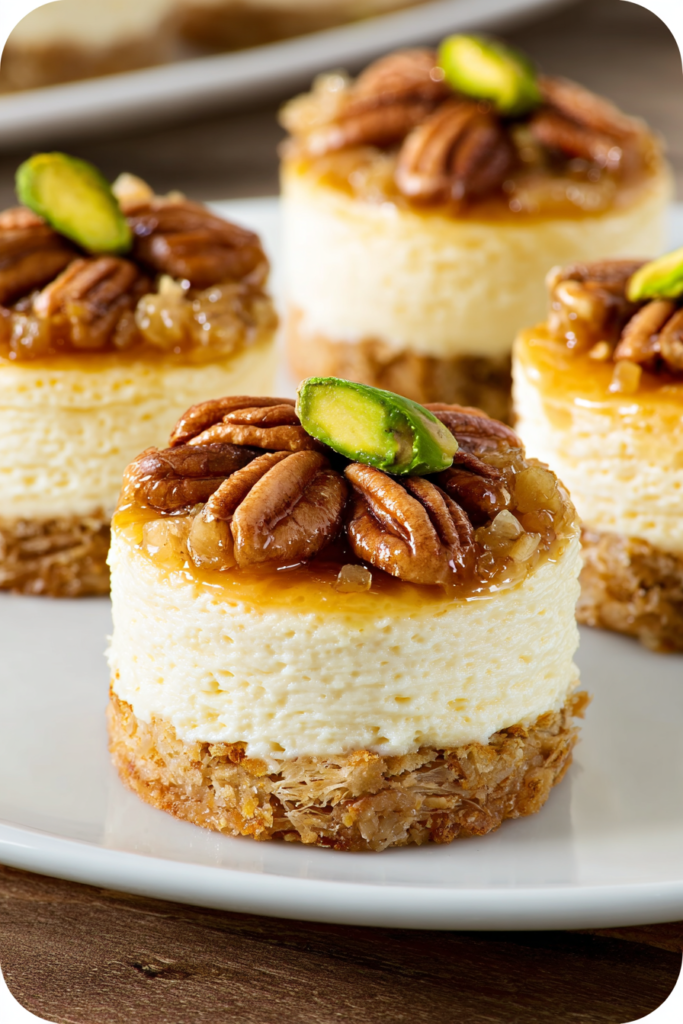
- Presentation Options – Serve directly in the paper liners for casual gatherings, or remove liners and plate individually on small dessert dishes with additional honey drizzle and crushed walnuts for formal occasions.
- Temperature Serving – While these taste excellent cold straight from the refrigerator, allowing them to sit at room temperature for 15-20 minutes brings out deeper flavor and creates more creamy texture.
Creative Variations to Try
- Pistachio Version – Replace walnuts with chopped pistachios for more vibrant color and slightly different nutty flavor that complements honey and cinnamon beautifully.
- Cardamom Enhancement – Add 1/4 teaspoon ground cardamom to the honey-cinnamon topping for additional Mediterranean spice complexity reminiscent of traditional baklava.
- Orange-Honey Profile – Add 1 teaspoon finely grated orange zest to the cream cheese filling and a splash of orange liqueur to the honey topping for citrus brightness.
- Chocolate-Baklava Fusion – Spread a thin layer of melted dark chocolate over the phyllo crust before adding the cheesecake filling for additional richness and depth.
Troubleshooting Common Issues
- Cracked or Sunken Tops – Overbaking, rapid temperature changes, or high oven temperatures cause cracks; ensure accurate oven temperature, don’t open the door during baking, and allow gradual cooling.
- Grainy or Lumpy Texture – Cold cream cheese or overmixing causes graininess; ensure cream cheese is room temperature and mix only until ingredients are just combined.
- Phyllo Crust Too Thick or Soggy – Using too much phyllo mixture or not pressing firmly enough creates dense crust; use approximately 1 tablespoon per cup and press gently but firmly.
- Honey Topping Sinking or Disappearing – Honey applied to still-warm cheesecakes absorbs too quickly; allow complete cooling (30+ minutes) before drizzling so honey remains visible on surface.
Why This Recipe Works
Mini Baklava Cheesecakes succeed through thoughtful combination of complementary elements that work in concert to create a cohesive whole. The phyllo crust provides textural contrast—crispy and flaky—against the creamy, dense cheesecake filling, creating the textural interest that makes each bite engaging. The cream cheese filling’s tanginess balances the sweetness of the honey topping and filling sugar, preventing the overall dessert from becoming one-dimensionally sweet. Walnuts contribute nutty depth and slight bitterness that prevents cloying sweetness while echoing actual baklava’s essential character. Cinnamon adds warm spice and aroma that complements all other flavors while the honey provides glossy sweetness reminiscent of actual baklava without overwhelming the delicate cheesecake base. The muffin-tin format serves dual purposes: it controls individual portions while creating the pastry-like shape that references traditional baklava. The relatively low baking temperature (325°F) ensures gentle cooking that prevents cracks and creates the smooth, creamy texture that defines quality cheesecake. At approximately 240-260 calories per cheesecake, this represents an indulgent, sophisticated dessert where calories derive primarily from cream cheese (fat and protein), sugar, butter, and walnuts—designed as a special-occasion treat reflecting the premium ingredients and presentation.
Final Thoughts
Mini Baklava Cheesecakes represent the successful marriage of two beloved dessert traditions into an innovative format that satisfies on multiple levels—visually striking, flavor-complex, and emotionally comforting. This recipe appeals particularly to those seeking elegant desserts that don’t require professional pastry training, food enthusiasts wanting to explore flavor fusion, or anyone desiring impressive presentations that appear far more complicated than their actual preparation. The individual format solves the common problem of cheesecake’s difficult slicing and serving, making these particularly appropriate for entertaining situations where you want impressive presentation without last-minute plating complications. The ahead-friendly nature allows hosts to prepare dessert days in advance, freeing mental energy and kitchen space for other meal components. While the 240-260 calorie estimate per cheesecake represents substantial indulgence, the small portion size combined with rich, complex flavors means these satisfy as elegant conclusion to meals without requiring large quantities. For those seeking lighter versions, consider using Greek yogurt to replace half the cream cheese, reducing sugar slightly, or using reduced-fat phyllo if available; though these modifications will alter the signature richness that makes these special. Ultimately, these mini cheesecakes deserve a permanent place in the entertaining dessert repertoire as proof that fusion cooking and culinary creativity don’t require innovation through complexity—sometimes the simplest ideas, thoughtfully executed, create the most memorable eating experiences.