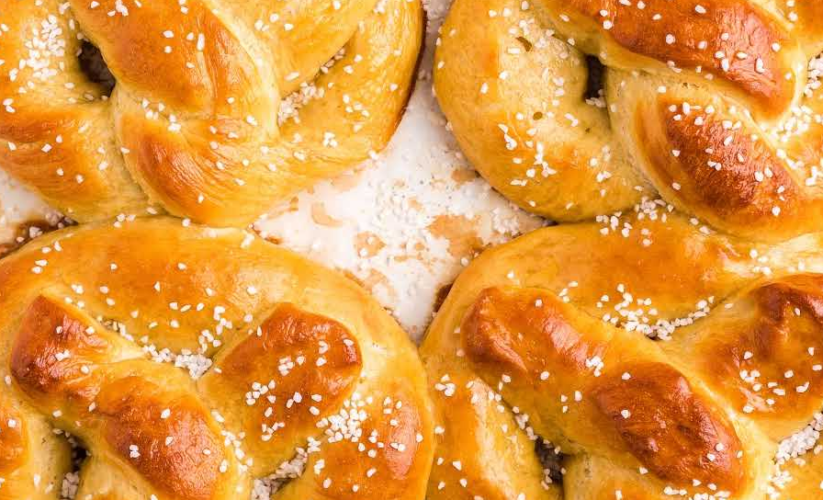
Homemade Soft Pretzels

Buttery homemade soft pretzels are an engaging culinary project that results in a classic snack featuring a chewy, golden-brown crust and a soft, pillowy interior. By utilizing a specialized hot water bath and high-protein bread flour, these pretzels achieve the iconic “pretzel shop” texture and flavor that is perfect for any gathering.
Why You’ll Love This Recipe
- Authentic Bakery Texture — The use of bread flour provides a higher protein content, resulting in the quintessential chewiness found in professional soft pretzels.
- Streamlined Yeast Process — Utilizing instant yeast eliminates the need for proofing in separate bowls, allowing for a faster and more reliable rise.
- Simplified Water Bath — Using very hot water instead of a boiling lye or soda solution makes the process safer and more accessible for home cooks.
- Customizable Shaping — While the traditional knot is classic, the dough is forgiving enough to be shaped into bites, twists, or even heart shapes.
- Rich Buttery Finish — A final generous coating of melted butter ensures the pretzel salt adheres perfectly while adding a luxurious flavor.
- Scalable Appetizer — This recipe produces eight large pretzels, making it an ideal choice for family game nights or Oktoberfest celebrations.
Ingredients You’ll Need
The Pretzel Dough
- 1½ cups warm water — Provides the necessary hydration and warmth to activate the yeast and develop the gluten.
- 1 tablespoon honey — Acts as a natural sweetener and a food source for the yeast to encourage a robust rise.
- ¾ teaspoon kosher salt — Regulates yeast activity and seasons the dough from within.
- 4¼ cups bread flour (divided) — The high-gluten foundation of the pretzel; 4 cups for the dough and ¼ cup for the work surface.
- ¼ ounce instant yeast — A fast-acting leavening agent that creates a light, airy internal structure.
- 1 tablespoon unsalted butter (melted/cooled) — Enriches the dough for a more tender, flavorful crumb.
The Hot Water Bath
- ⅓ cup baking soda — Creates the alkaline environment necessary to produce the iconic dark brown, flavored crust.
- 4 cups very hot water (150–160°F) — Dissolves the soda and gelatinizes the surface starch of the dough for a shiny finish.
The Topping
- ¼ cup unsalted butter (melted) — Brushed over the hot pretzels to add richness and a professional sheen.
- 2 tablespoons pretzel salt — Large, crunchy salt crystals that provide the classic savory finishing touch.
Step-by-Step Instructions
Mix the Dough In a stand mixer fitted with a dough hook, stir together the warm water, honey, and salt until dissolved. Add 4 cups of bread flour and the yeast, then slowly drizzle in the melted butter while the mixer runs on very low speed.
Knead for Elasticity Increase the mixer speed to medium-low and knead for 5 minutes until a smooth, slightly sticky ball forms. This process develops the gluten network required for a chewy, structural pretzel.
Rise and Double Cover the bowl loosely with plastic wrap and allow the dough to rest on the counter for 1 hour. The dough is ready when it has approximately doubled in size and feels light to the touch.
Shape the Ropes Turn the dough onto a floured surface, press into a rectangle, and cut into eight 1-inch strips. Gently roll each strip into a 20-inch rope, taking care not to pull or tear the dough.
Form the Pretzels Cross the ends of a rope to form a circle, twist the overhanging ends once, and bring them down to meet the bottom of the circle. Place the shaped pretzels on a parchment-lined sheet to rest while preparing the water bath.
Bathe the Dough Dissolve the baking soda in a dish of very hot water and submerge each pretzel for 30 seconds per side. Use a slotted spoon to remove them, allowing excess liquid to drip off before returning them to the baking sheet.
Bake and Garnish Bake at 400°F for 15 minutes until the crusts are deeply golden brown. Immediately upon removal from the oven, brush with melted butter and sprinkle generously with pretzel salt.
Recipe Notes & Tips
- Water Temperature Precision — Ensure your “warm” water is between 105–115°F; if it is too hot, it will kill the yeast, and if too cold, the dough won’t rise.
- Bread Flour vs. All-Purpose — While all-purpose flour works, bread flour is highly recommended for that specific, sturdy “snap” and chew characteristic of traditional pretzels.
- The Soda Science — The baking soda bath is what causes the Maillard reaction to accelerate; without this step, your pretzels will look like regular pale bread.
- Don’t Overwork the Ropes — If the dough keeps shrinking back while you roll the ropes, let it rest for 5 minutes to relax the gluten before trying again.
- Immediate Salting — The salt must be applied while the butter is wet and the pretzel is hot; otherwise, the crystals will simply bounce off the surface.
Nutritional Information
- Prep Time: 15 minutes
- Cooking/Chilling Time: 15 minutes (plus 1 hour rise)
- Total Time: 1 hour 30 minutes
- Servings: 8 large pretzels
- Calories: 314 kcal per pretzel (Estimation based on full butter and flour quantities).
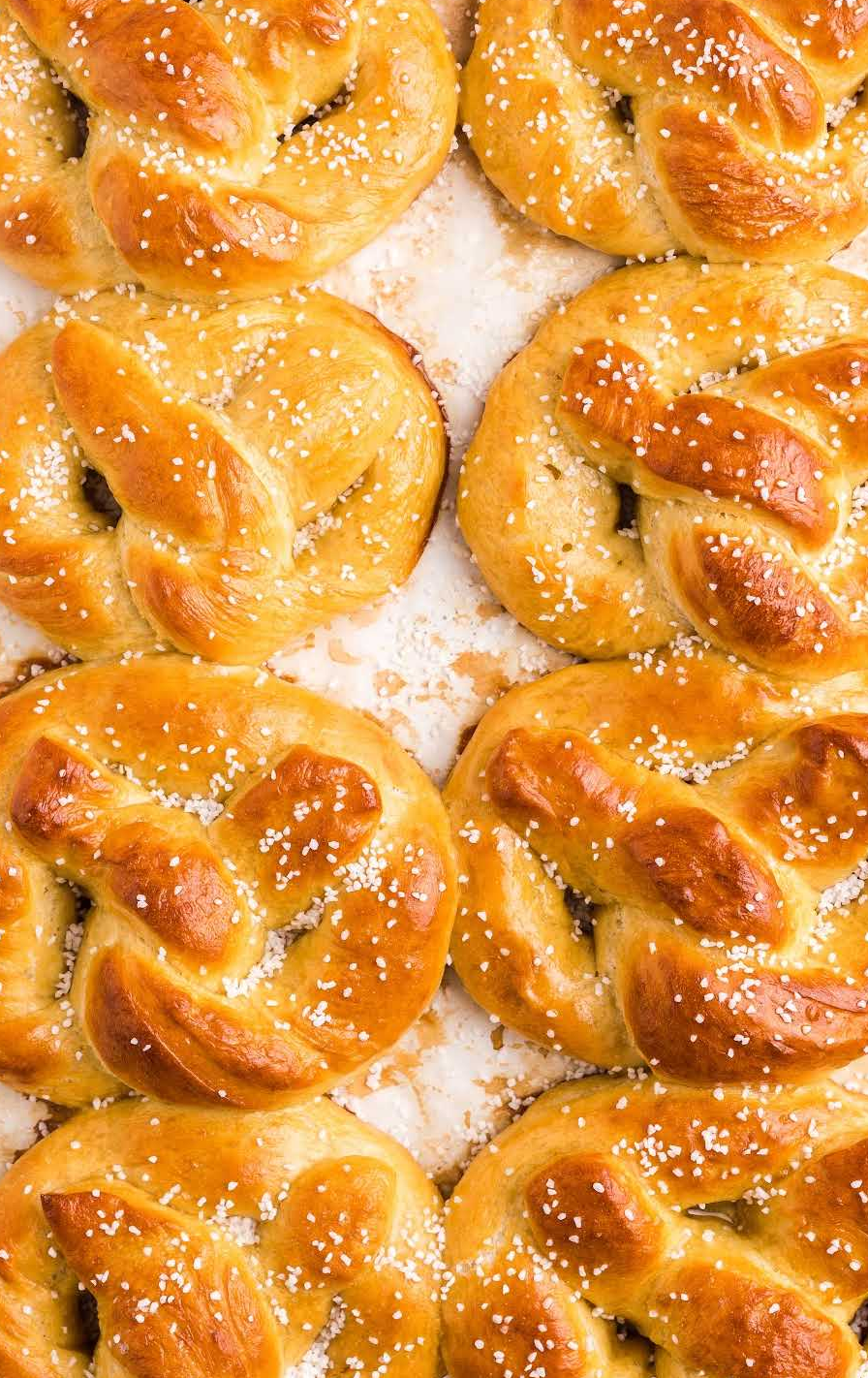
Perfect Pairings
- Warm Beer Cheese Dip — The sharp, creamy flavors of cheddar and ale perfectly complement the salty, buttery crust.
- Honey Mustard Sauce — Provides a sweet and tangy contrast that cuts through the richness of the dough.
- German Bratwurst — Transform the pretzels into a full meal by serving alongside traditional grilled sausages.
- Spicy Brown Mustard — A classic, low-calorie accompaniment that adds a pungent kick to every bite.
Ideal Occasions
- Game Day Tailgates — A sturdy, handheld snack that is easy to serve and highly satisfying for a crowd.
- Oktoberfest Celebrations — An essential component of any German-themed party or autumn gathering.
- After-School Snacks — A fun, interactive project that children enjoy helping to shape and decorate.
- Holiday Appetizer Spreads — Provides a rustic, homemade touch to a New Year’s Eve or Super Bowl party.
Storage & Serving Tips
- Freshness Window — Soft pretzels are best consumed within a few hours of baking; the salt will eventually begin to melt into the dough if left too long.
- Freezing Technique — Freeze baked pretzels (without salt, if possible) for up to 2 months; reheat in a 350°F oven for 5 minutes to restore the texture.
- Reviving Stale Pretzels – A quick 10-second zap in the microwave can soften a day-old pretzel, though the crust will lose its crispness.
- Room Temperature Storage — Store in a paper bag rather than plastic to prevent the crust from becoming unpleasantly soft or gummy.
Creative Variations to Try
- Cinnamon Sugar Pretzels — Omit the pretzel salt; instead, toss the buttered, hot pretzels in a mixture of cinnamon and granulated sugar.
- Jalapeño Cheddar Pretzels — Press sliced jalapeños and shredded cheddar onto the dough after the water bath but before baking.
- Everything Bagel Pretzels — Replace the pretzel salt with Everything Bagel seasoning for a garlicky, seedy twist.
- Pretzel Dogs — Wrap the 20-inch dough ropes around hot dogs before the water bath for a classic “pigs in a blanket” upgrade.
Troubleshooting Common Issues
- Pretzels are Too Dense — Your dough likely didn’t rise enough. Solution: Ensure your yeast is fresh and let the dough double in a warm, draft-free spot.
- Pale Color After Baking — The water bath wasn’t alkaline enough. Solution: Ensure the baking soda is fully dissolved and the water remains very hot during dipping.
- Dough is Too Sticky to Handle – You may have high humidity. Solution: Add an extra tablespoon of flour at a time until the dough clears the sides of the bowl.
- Salt Melted into the Crust — This happens if the pretzels are stored in plastic while still warm. Solution: Allow them to cool completely on a wire rack.
Why This Recipe Works
The success of these pretzels is driven by gluten development and surface gelatinization. Kneading the high-protein bread flour creates a strong elastic matrix that traps the carbon dioxide produced by the instant yeast. The baking soda bath increases the pH of the dough’s surface, which breaks down proteins and sugars, allowing the Maillard reaction to occur rapidly at 400°F. This results in the characteristic dark color and unique “pretzel” flavor that cannot be achieved by baking alone. At approximately 314 calories per serving, this snack provides a satiating balance of complex carbohydrates and fats.
Final Thoughts
Homemade Soft Pretzels are a masterclass in the transformative power of simple pantry staples. By combining a few minutes of kneading with a quick alkaline bath, you can recreate a world-class snack in your own kitchen. For a lighter version, you can reduce the final butter brush, though the original buttery finish remains the gold standard for an authentic experience.