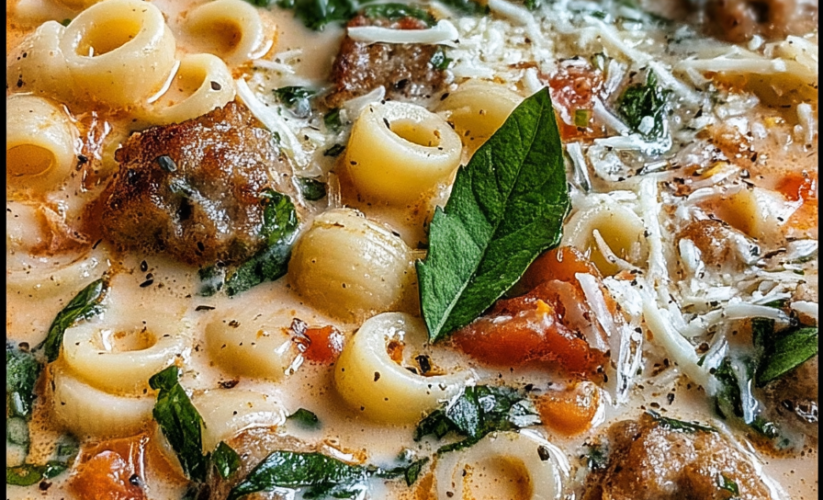
Creamy Parmesan Italian Sausage Ditalini Soup

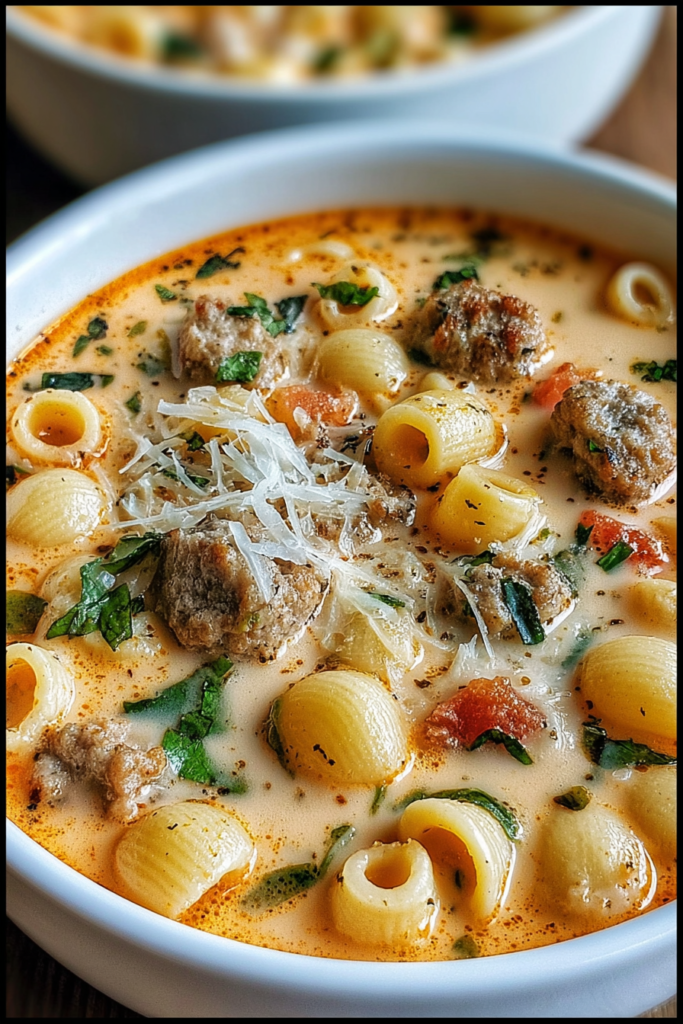
This luxuriously creamy soup combines the hearty richness of Italian sausage with tender pasta shells swimming in a velvety Parmesan cream broth that rivals any Italian restaurant’s signature dish. The magic happens when the starchy pasta cooking water mingles with heavy cream and freshly grated Parmesan, creating a silky, coating sauce that clings to every piece of ditalini while the savory sausage and aromatic garlic provide deep, satisfying flavor in every spoonful. With optional spinach adding a pop of color and nutrition, this one-pot wonder goes from stovetop to table in just 30 minutes, delivering comfort food perfection with minimal cleanup.
Why You’ll Love This Recipe
Restaurant-quality in 30 minutes – This soup tastes like it simmered for hours but actually comes together in half an hour, making it perfect for weeknight dinners when you want impressive flavor without the time commitment.
One-pot simplicity – Everything cooks in a single large pot—brown the sausage, simmer the pasta, add the cream—eliminating multiple dishes and making cleanup remarkably easy for such a rich, complex-tasting soup.
Creamy without being heavy – The combination of chicken broth and cream creates luxurious texture without the overwhelming heaviness of pure cream soups, while Parmesan adds savory depth that prevents it from tasting bland or one-dimensional.
Customizable spice level – Use sweet Italian sausage for family-friendly mildness, hot Italian sausage for spicy kick, or a combination to please diverse palates around the same dinner table.
Pasta cooks right in the soup – No need to boil pasta separately; cooking ditalini directly in the broth infuses it with flavor while releasing starches that naturally thicken the soup to perfect consistency.
Comfort food that sneaks in vegetables – The optional spinach wilts into the creamy base almost invisibly, providing vitamins and minerals that picky eaters won’t even notice while adding beautiful green flecks throughout.
Ingredients You’ll Need
For the Sausage Base
1 lb Italian sausage – Choose sweet (mild), hot (spicy), or a combination based on preference; bulk sausage works best, but remove casings from links if that’s what’s available—the fennel and herbs in Italian sausage are essential to this soup’s flavor profile
1 tablespoon olive oil – Provides fat for browning the sausage and sautéing aromatics; prevents sticking and adds subtle fruity notes that complement Italian flavors
1 small onion, diced – Yellow or white onion adds sweet, aromatic foundation; dice into small pieces (about ¼ inch) so they soften completely and integrate into the soup rather than remaining chunky
3 cloves garlic, minced – Fresh garlic is essential here; its pungent, aromatic compounds bloom when sautéed briefly, creating depth that garlic powder cannot replicate
For the Soup Base
4 cups chicken broth – Use quality broth as it forms the flavor foundation; low-sodium gives you better control over final seasoning, while regular broth may make the soup too salty once Parmesan is added
1 cup ditalini pasta – These small tube-shaped pasta pieces are traditional in Italian soups; if unavailable, substitute small shells, orzo, or broken spaghetti—but ditalini’s tubular shape catches sauce beautifully
1 teaspoon Italian seasoning – Blend of oregano, basil, thyme, and rosemary that reinforces the Italian character; use a quality brand for best flavor or make your own with equal parts dried herbs
For the Creamy Finish
1 cup heavy cream – Also called heavy whipping cream (36-40% fat), this creates the signature silky, luxurious texture; half-and-half works for lighter version but won’t be as rich or velvety
1 cup grated Parmesan cheese – Freshly grated Parmigiano-Reggiano is worth the investment here—it melts smoothly and provides nutty, complex flavor that pre-grated cheese cannot match; avoid the shelf-stable powdered type
1 cup fresh spinach (optional) – Baby spinach leaves are easiest; they wilt quickly and have mild flavor that even vegetable-resistant eaters accept—frozen spinach works but must be thawed and squeezed completely dry first
Salt & pepper, to taste – Wait to add salt until after Parmesan is incorporated, as both the cheese and sausage contribute significant sodium; freshly ground black pepper adds essential warmth
Step-by-Step Instructions
Brown the Italian sausage Heat the 1 tablespoon of olive oil in a large, heavy-bottomed pot or Dutch oven over medium-high heat until shimmering. Add the 1 pound of Italian sausage, breaking it apart with a wooden spoon or spatula into small, bite-sized crumbles. Cook for 6-8 minutes, stirring occasionally, until the sausage is deeply browned with some crispy bits and no pink remains—this browning creates fond (flavorful browned bits) on the pot bottom that will enrich the soup’s flavor.
Sauté the aromatics Reduce heat to medium and add the diced onion to the pot with the browned sausage. Sauté for 3-4 minutes, stirring occasionally, until the onion softens and becomes translucent. Add the 3 cloves of minced garlic and stir constantly for about 1 minute until fragrant but not browned—garlic burns quickly and becomes bitter if overcooked, so watch carefully and keep it moving in the pan.
Add broth, pasta, and seasonings Pour in the 4 cups of chicken broth, using a wooden spoon to scrape up any browned bits stuck to the pot bottom (this is deglazing, which incorporates concentrated flavor into the liquid). Add the 1 cup of ditalini pasta and 1 teaspoon of Italian seasoning, stirring to combine. Increase heat to high and bring the mixture to a rolling boil.
Simmer until pasta is tender Once boiling, reduce heat to medium-low to maintain a gentle simmer (small bubbles breaking the surface, not a vigorous boil). Cook uncovered for 8-10 minutes, stirring occasionally to prevent pasta from sticking to the pot bottom, until the ditalini is al dente (tender but with slight firmness when bitten)—the pasta will continue softening slightly after you add the cream, so don’t overcook at this stage.
Create the creamy Parmesan base Reduce heat to low. Slowly pour in the 1 cup of heavy cream while stirring continuously to incorporate it throughout the soup—adding it slowly prevents temperature shock that could cause curdling. Gradually add the 1 cup of grated Parmesan cheese in handfuls, stirring constantly after each addition until the cheese melts completely into the soup and no clumps remain, creating a smooth, creamy consistency.
Add spinach and final seasoning If using spinach, add the 1 cup of fresh leaves to the soup and stir gently. The residual heat will wilt the spinach in just 1-2 minutes—it will reduce dramatically in volume and integrate into the creamy broth. Taste the soup and add salt and freshly ground black pepper as needed, keeping in mind that Parmesan and sausage already provide significant saltiness.
Rest briefly and serve Remove the pot from heat and let the soup sit for 2-3 minutes before serving. This brief resting period allows the flavors to meld and the soup to thicken slightly as it cools to an ideal eating temperature. Ladle into bowls and serve immediately, garnished with extra Parmesan cheese if desired.
Recipe Notes & Tips
Fresh Parmesan is non-negotiable – Pre-grated Parmesan contains anti-caking agents (cellulose) that prevent smooth melting and can make the soup grainy; invest in a block of Parmigiano-Reggiano and grate it yourself for silky results.
Don’t boil after adding cream – Once cream is incorporated, keep the heat low and avoid boiling, which can cause the dairy to separate or curdle, creating an unappealing grainy texture and broken appearance.
Pasta timing matters – Ditalini should be added when you’re ready to eat within 20 minutes; if making ahead, cook the soup without pasta, then add it fresh when reheating as pasta continues absorbing liquid and becomes mushy during storage.
Adjust consistency as needed – If the soup becomes too thick (either immediately or after sitting), thin it with additional chicken broth or even water, adding ¼ cup at a time until you reach desired consistency—pasta continues absorbing liquid as it sits.
Sausage alternatives – Ground Italian-seasoned turkey or chicken sausage works for lighter version; for vegetarian, substitute crumbled plant-based Italian sausage or omit entirely and add extra vegetables like mushrooms and bell peppers.
Storage and reheating – Refrigerate cooled soup in an airtight container for up to 3 days; reheat gently over low heat, stirring frequently and adding broth to thin as needed—cream-based soups don’t freeze well as dairy separates upon thawing.
Nutritional Information
Prep Time: 10 minutes
Cook Time: 20 minutes
Total Time: 30 minutes
Servings: 4-6 bowls (depending on appetite; recipe yields approximately 6-7 cups of soup)
Calories per serving: Approximately 480-520 kcal per serving based on 4 servings (varies with sausage fat content and exact portions; using turkey sausage and half-and-half instead of heavy cream reduces by 120-150 calories per serving)
Perfect Pairings
Crusty Italian bread or garlic bread – Essential for soaking up the creamy, flavorful broth; warm, crusty bread with butter or garlic toast provides textural contrast and ensures not a drop of that delicious soup goes to waste.
Caesar salad or simple green salad – Crisp romaine with tangy Caesar dressing or mixed greens with lemon vinaigrette provides refreshing contrast to the rich, creamy soup and adds vegetables to balance the meal.
Roasted vegetables – Oven-roasted broccoli, Brussels sprouts, or green beans seasoned simply with olive oil and salt offer healthy sides that complement without competing with the soup’s bold Italian flavors.
White wine or sparkling water – A crisp Pinot Grigio or Sauvignon Blanc cuts through the cream and enhances the Italian character, while sparkling water with lemon provides a refreshing, palate-cleansing non-alcoholic option.
Ideal Occasions
Busy weeknight dinners – With just 30 minutes from start to finish and one-pot convenience, this soup is perfect for those hectic evenings when you need something substantial, satisfying, and quick.
Cozy winter meals – The creamy, warming nature makes this ideal for cold weather comfort food that fills your home with inviting aromas and delivers the kind of satisfaction that only soup can provide.
Casual entertaining – Serve in a large tureen at the table family-style, letting guests ladle their own portions—it’s impressive enough for company but relaxed enough to feel welcoming rather than fussy.
Meal prep Mondays – Make a big batch early in the week (without pasta), then add fresh pasta each time you reheat for quick, homemade lunches or dinners that taste freshly made.
Storage & Serving Tips
Refrigerator storage – Cool soup completely before transferring to airtight containers; store for up to 3 days, noting that pasta will continue absorbing liquid and become softer over time.
Freezing not recommended – Cream-based soups with dairy separate and become grainy when frozen and thawed; if you must freeze, do so before adding cream, then add fresh cream when reheating.
Reheating properly – Warm over low heat on the stovetop, stirring frequently to prevent scorching on the pot bottom; add broth or water to thin if the soup has thickened from pasta absorption, and avoid microwave if possible as it heats unevenly.
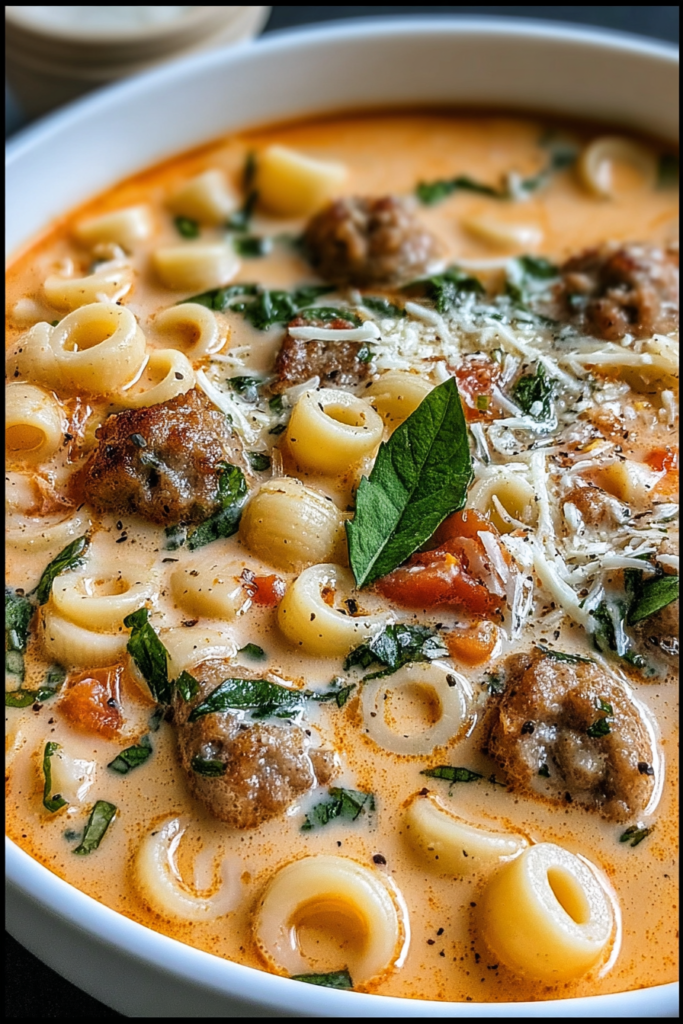
Serving suggestions – Ladle into wide, shallow bowls for best presentation; garnish with freshly grated Parmesan, a drizzle of quality olive oil, red pepper flakes for heat, or fresh basil for color and aroma.
Creative Variations to Try
Tuscan white bean version – Add 1 can of drained, rinsed cannellini beans along with the pasta for additional protein, fiber, and authentic Tuscan character that makes the soup even more substantial.
Tomato-cream hybrid – Add 1 cup of crushed tomatoes or tomato sauce along with the broth for a rosé-colored soup that bridges creamy and tomato-based Italian soups.
Tortellini upgrade – Replace ditalini with cheese tortellini for an even more decadent version that feels special enough for entertaining; reduce cooking time as tortellini cooks faster than dry pasta.
Keto-friendly cauliflower version – Omit pasta entirely and add 2 cups riced cauliflower for a low-carb alternative that maintains the creamy, satisfying character while dramatically reducing carbohydrates.
Troubleshooting Common Issues
Soup is too thick – Pasta absorbed too much liquid or cooked too long; thin with additional chicken broth, cream, or water, adding ¼ cup at a time while reheating until desired consistency is reached.
Cream separated or looks curdled – Heat was too high after adding cream or the soup boiled; unfortunately there’s no fix, but prevent it next time by keeping heat low and never letting cream-based soup boil vigorously.
Not enough flavor – Sausage was too mild or not enough seasoning; next time, use hot Italian sausage or add ½ teaspoon red pepper flakes, and always taste before serving to adjust salt and pepper appropriately.
Parmesan is clumpy – Pre-grated cheese was used or cheese was added to soup that was too hot; use only freshly grated Parmesan and add it gradually over low heat while stirring constantly for smooth integration.
Why This Recipe Works
Creamy Parmesan Italian Sausage Ditalini Soup succeeds through the strategic layering of flavors and the scientific interaction between pasta starch, dairy fat, and aged cheese that creates luxurious texture without excessive cream. Browning the Italian sausage first creates fond through the Maillard reaction—complex flavor compounds that form when proteins and sugars are heated together, producing hundreds of savory molecules that would be absent if the meat were simply simmered. Sautéing onions in the rendered sausage fat allows them to absorb those meaty flavors while their natural sugars caramelize, adding sweetness that balances the rich, salty elements. Garlic sautéed briefly releases allicin and other sulfur compounds that provide pungent aroma and depth without the harshness of raw garlic or the bitterness of burned garlic. Cooking pasta directly in the broth rather than separately serves multiple purposes: the pasta absorbs the seasoned broth rather than plain water, becoming more flavorful; the starches released from the pasta naturally thicken the soup through gelatinization; and the technique saves time and reduces dishes. The 1:4 ratio of pasta to liquid ensures the noodles have room to expand and cook properly without absorbing all the broth and becoming a thick stew. Heavy cream’s high fat content (36-40%) creates stable emulsion with the broth that resists breaking or curdling better than lower-fat dairy like milk or half-and-half, while its richness coats the palate and carries flavors. Parmesan cheese contributes not just flavor but also natural glutamates (umami compounds) that enhance savory perception throughout the dish, while its aged, crystalline structure melts smoothly when added gradually to warm (not boiling) liquid. The proteins in Parmesan, primarily casein, denature and disperse into the liquid when heated gently, thickening through their water-binding properties while contributing that characteristic nutty, salty flavor. Italian seasoning’s herb blend—typically oregano, basil, thyme, rosemary, and sometimes marjoram—contains essential oils that complement both the fennel notes in Italian sausage and the richness of the cream, tying all elements together with aromatic, herbaceous notes. Adding spinach at the end preserves its bright green color (prolonged cooking would turn it drab olive) and tender texture while its mild flavor virtually disappears into the creamy base, making it an easy vegetable addition even for resistant eaters. The brief rest after cooking allows the soup to thicken slightly as starches continue absorbing liquid and temperatures equalize, while also bringing it to an ideal eating temperature that won’t burn mouths. At approximately 480-520 calories per serving, this soup provides a complete, satisfying meal with 20-25g protein from sausage and cheese, 25-30g carbohydrates from pasta, and substantial fat from cream and sausage that creates genuine satiety.
Final Thoughts
Creamy Parmesan Italian Sausage Ditalini Soup represents the perfect intersection of comfort, convenience, and sophistication—proving that restaurant-quality Italian flavors can emerge from your own kitchen with minimal time investment and straightforward techniques. This recipe demonstrates that impressive cooking doesn’t always require lengthy ingredient lists or complicated procedures; sometimes the most memorable dishes come from intelligently combining simple elements and allowing them to work together harmoniously. The one-pot method means you can produce this elegant soup even on hectic weeknights when doing dishes feels like an insurmountable task, while the 30-minute timeline ensures dinner can happen even when you’re starting from scratch at 6 PM. While the calorie count of 480-520 per serving is substantial, this is genuinely a complete meal that requires nothing more than bread and perhaps a simple salad to feel satisfying and balanced—the combination of protein, carbohydrates, and vegetables (if using spinach) creates a nutritionally complete plate in a single bowl. For those watching calories, you can reduce each serving to approximately 350-400 calories by using turkey Italian sausage, substituting half-and-half for heavy cream, using less pasta and more vegetables, and reducing the Parmesan—all while maintaining the essential creamy, comforting character that defines this soup. The customizable nature means you can adjust spice levels, add or omit vegetables, vary the pasta shape, or even make it low-carb, ensuring this recipe adapts to your family’s preferences and dietary needs rather than requiring you to adapt to it. Whether you’re seeking a quick weeknight dinner, a warming winter meal, an impressive but easy dish for casual entertaining, or simply craving that particular comfort that only creamy soup can provide, this Creamy Parmesan Italian Sausage Ditalini Soup delivers on every promise—proving once again that some of the best recipes are those that make both the cooking and the eating equally rewarding, nourishing both body and soul with minimal fuss and maximum flavor.