Classic Reuben Bake with Corned Beef, Sauerkraut & Swiss

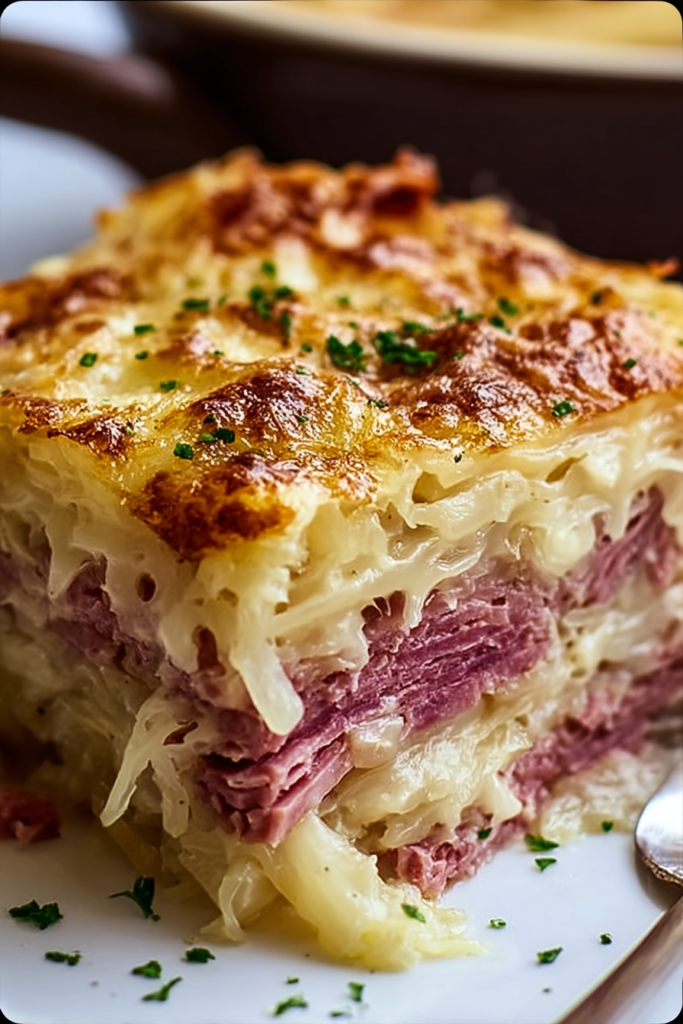
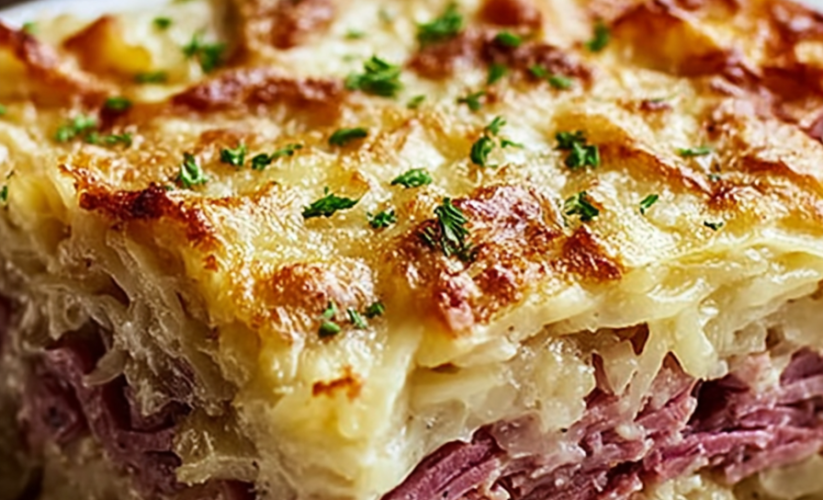
This ingenious casserole captures all the iconic flavors of the beloved deli sandwich—tangy sauerkraut, tender corned beef, melty Swiss cheese, and creamy Thousand Island dressing—and transforms them into a sliceable, shareable bake that’s perfect for feeding a crowd. The magic happens when flaky crescent roll dough encases the classic Reuben fillings, creating golden, buttery layers on top and bottom that provide the satisfying bread element without the tedious assembly of individual sandwiches. Baked until bubbly and bronze, with optional caraway seeds adding that authentic rye bread flavor, this dish delivers all the comfort of the classic sandwich in a format that’s easier to prepare, serve, and share.
Why You’ll Love This Recipe
Reuben sandwich without the fuss – All the flavors of the classic deli favorite without grilling individual sandwiches or dealing with messy assembly; simply layer everything in a pan and bake for effortless, crowd-sized portions.
Crescent roll shortcut brilliance – Using refrigerated crescent dough eliminates the need for bread or making pastry from scratch, while creating flaky, buttery layers that are arguably even better than traditional rye bread.
Perfect for game day and gatherings – This casserole cuts into neat squares that are easy to serve buffet-style, stays warm for extended periods, and feeds 8-12 people from a single pan—ideal for parties where finger foods rule.
Kid and picky-eater approved – Many children who resist regular Reuben sandwiches love this baked version where the sauerkraut is mellowed by cheese and the presentation feels less intimidating than a towering sandwich.
Make-ahead convenience – Assemble the entire casserole hours before baking, refrigerate until needed, then pop it in the oven when guests arrive—perfect for stress-free entertaining when you want hot food without last-minute work.
Budget-friendly deli flavors – Using deli corned beef and simple ingredients, this casserole delivers restaurant-quality Reuben flavors at a fraction of the cost of feeding a crowd with actual deli sandwiches.
Ingredients You’ll Need
For the Pastry Layers
2 cans refrigerated crescent dough – Use standard 8-ounce tubes (16 crescents total); one can forms the bottom crust while the other creates the top layer that seals in all the delicious filling
For the Classic Reuben Filling
1 lb sliced corned beef, chopped – Use deli-sliced corned beef and chop into bite-sized pieces for easy eating and even distribution; leftover homemade corned beef or quality packaged varieties work equally well
2 cups sauerkraut, drained well – Absolutely crucial to drain thoroughly—place sauerkraut in a fine-mesh strainer and press firmly with the back of a spoon, or squeeze handfuls to remove excess liquid that would make the pastry soggy
2 cups shredded Swiss cheese – Authentic Swiss cheese with its nutty, slightly sweet flavor is traditional, but Gruyère offers more sophisticated taste, or use pre-shredded for convenience
½ cup Thousand Island dressing – The signature condiment that defines Reuben flavor; use store-bought or homemade—its tangy, slightly sweet creaminess ties all the elements together
For Seasoning and Finishing
1 tablespoon caraway seeds (optional) – These aromatic seeds provide authentic rye bread flavor; they’re traditional in Reubens but can be omitted if you’re not a fan of their distinctive anise-like taste
1 egg, beaten (for brushing) – Creates that beautiful golden-brown, glossy finish on the top crust; the egg wash is what makes this look bakery-professional
Salt & pepper to taste – Minimal additional seasoning is needed since corned beef is already salty, but a few grinds of black pepper enhance the overall flavor profile
Step-by-Step Instructions
Preheat oven and prepare baking dish Set your oven to 375°F (190°C) and position the rack in the center for even heat distribution. Generously grease a 9×13-inch baking dish with cooking spray or butter, ensuring you coat the corners and sides—this prevents the cheese from sticking and makes serving much easier.
Create the bottom crust Open one can of refrigerated crescent dough and unroll it carefully. Press the dough into the bottom of the prepared 9×13-inch dish, stretching gently to cover the entire bottom and slightly up the sides (about ½ inch). Use your fingers to press and seal all the perforated seams together, creating a continuous, solid crust with no gaps—this prevents filling from leaking through during baking.
Layer the corned beef Take the 1 pound of sliced corned beef and chop it into roughly ½-inch pieces using a sharp knife. Distribute the chopped corned beef evenly over the crescent dough bottom crust, spreading it from edge to edge—uniform distribution ensures every slice gets equal amounts of meat.
Add the sauerkraut layer Drain the 2 cups of sauerkraut extremely well—this cannot be emphasized enough. Place it in a fine-mesh strainer and press firmly with the back of a spoon to remove as much liquid as possible, or grab handfuls and squeeze out the moisture over the sink. Distribute the well-drained sauerkraut evenly over the corned beef layer, again spreading edge to edge.
Add cheese and dressing Sprinkle the 2 cups of shredded Swiss cheese evenly over the sauerkraut layer, ensuring complete coverage. Using a spoon, drizzle the ½ cup of Thousand Island dressing over everything in a zigzag pattern, trying to distribute it as evenly as possible across the entire surface—it doesn’t need to be perfect as it will spread during baking.
Top with second crust Open the second can of crescent dough and unroll it carefully. Lay the dough sheet over the top of the filling, stretching gently to cover completely. Press the edges of the top crust against the bottom crust around the perimeter to seal, and press the perforated seams together just as you did for the bottom crust—this creates a sealed packet that contains the filling while baking.
Apply egg wash and seasonings In a small bowl, beat the egg thoroughly with a fork until the yolk and white are completely combined. Using a pastry brush, brush the beaten egg evenly over the entire top surface of the crescent dough—this creates the beautiful golden color and slight sheen. If using caraway seeds, sprinkle the tablespoon evenly over the egg-washed surface, and add a few grinds of black pepper if desired.
Bake to golden perfection Place the assembled casserole in the preheated oven and bake for 25-30 minutes, checking at 25 minutes. The casserole is done when the top is deeply golden brown, the edges are bubbling with melted cheese, and the bottom crust has cooked through (you can gently lift a corner with a spatula to check). If the top browns too quickly before the filling is hot throughout, tent loosely with foil for the final 5-10 minutes.
Rest before serving Remove from the oven and let the casserole rest for 10 minutes before cutting. This crucial cooling period allows the cheese to firm up slightly and the layers to set, making clean slicing possible—cutting immediately results in a molten, messy presentation that falls apart on the plate. After resting, cut into 8-12 squares depending on appetite and serve warm.
Recipe Notes & Tips
Draining sauerkraut is critical – This is the single most important step for success; inadequately drained sauerkraut releases liquid during baking that makes the bottom crust soggy and the casserole watery—take the time to squeeze it thoroughly.
Sealing the dough matters – Press those perforated seams firmly together on both top and bottom crusts; gaps allow filling to leak out during baking and prevent the pastry from achieving proper flaky texture.
Deli corned beef options – Visit the deli counter and ask for corned beef sliced at medium thickness; too thin and it shreds when chopping, too thick and it won’t integrate well into layers—or use packaged corned beef from the refrigerated section.
Swiss cheese alternatives – While Swiss is traditional, Gruyère offers more complex, nutty flavor; provolone provides milder taste; or use a combination of Swiss and mozzarella for maximum meltability.
Make-ahead assembly – Assemble the entire casserole through adding the top crust and egg wash, then cover tightly with plastic wrap and refrigerate for up to 8 hours; add 5 minutes to baking time if starting cold.
Storage and reheating – Cool completely, cover tightly, and refrigerate for up to 3 days; reheat individual portions in the microwave for 1-2 minutes or the whole pan covered with foil at 325°F for 20-25 minutes until heated through.
Nutritional Information
Prep Time: 15 minutes
Cook Time: 25-30 minutes
Total Time: 50-55 minutes (including 10-minute rest)
Servings: 8-12 portions (depending on appetite; 9×13 pan yields 8 large or 12 smaller squares)
Calories per serving: Approximately 380-450 kcal based on 8 servings (varies with portion size and exact ingredients used; reducing cheese and dressing can lower by 60-80 calories per serving)
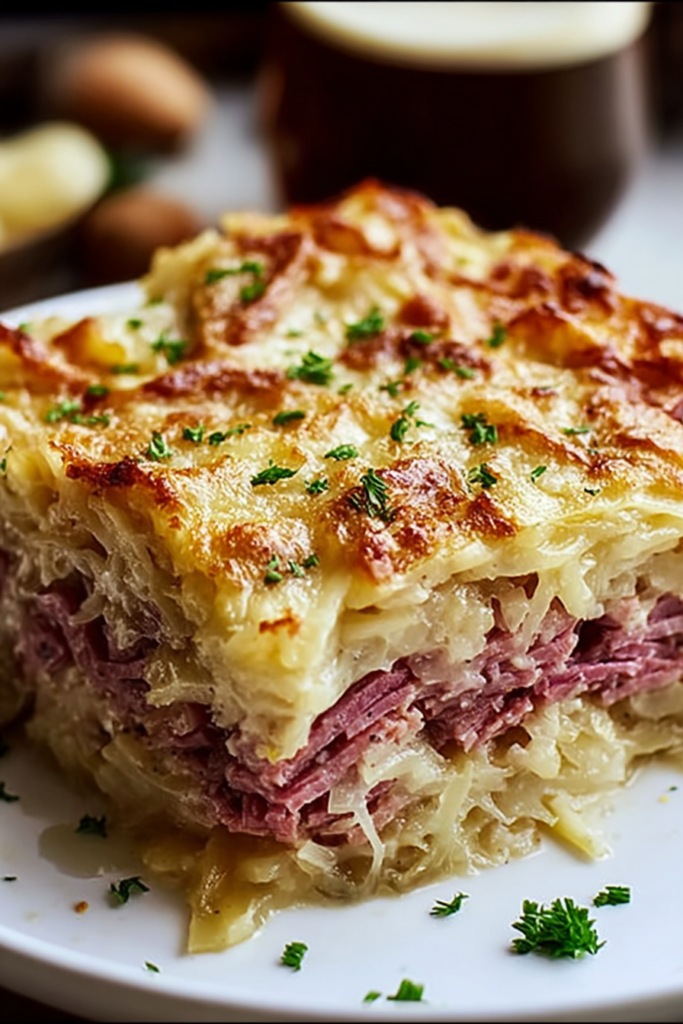
Perfect Pairings
Dill pickle spears – Classic Reuben accompaniment; the vinegary crunch and cool, briny flavor cut through the rich cheese and provide palate-cleansing contrast between bites.
Potato salad or coleslaw – Traditional deli sides that complement the Reuben flavors; creamy potato salad adds comforting heft while tangy coleslaw provides refreshing crunch and acidity.
Kettle-cooked chips or fries – Salty, crispy potatoes are perfect alongside, whether you prefer classic potato chips, sweet potato fries, or crispy french fries for dipping in extra Thousand Island.
Cold beer or root beer – An ice-cold lager or craft beer pairs beautifully with the salty, tangy flavors, while root beer offers a nostalgic, non-alcoholic option that evokes classic deli dining.
Ideal Occasions
Game day gatherings and Super Bowl parties – This casserole is perfect for sports viewing as it’s easy to eat while standing, stays warm on a buffet, and feeds hungry crowds without requiring plates and utensils.
Potluck dinners and block parties – Transport easily in the baking dish, requires no special serving equipment, appeals to diverse ages, and stands out from typical casserole offerings with its distinctive deli flavors.
St. Patrick’s Day celebrations – The corned beef connection makes this naturally appropriate for Irish-themed gatherings, offering a creative alternative to traditional corned beef and cabbage dinners.
Casual weekend entertaining – When you’re hosting friends for a casual get-together and want substantial food that doesn’t require formal plating or constant kitchen attention, this delivers perfectly.
Storage & Serving Tips
Room temperature holding – This casserole can sit at room temperature for up to 2 hours after baking, making it ideal for buffet situations; keep it covered loosely with foil to retain warmth.
Refrigerator storage – Cool completely to room temperature, then cover tightly with plastic wrap or transfer to an airtight container; keeps for 3-4 days and actually slices even more cleanly when cold.
Freezing considerations – While possible to freeze, the crescent dough texture changes somewhat upon thawing; if you do freeze, wrap tightly in plastic then foil for up to 1 month and thaw overnight in refrigerator before reheating.
Serving suggestions – Cut into squares using a sharp knife, wiping the blade between cuts for clean edges; serve with extra Thousand Island dressing on the side for those who want more sauce, and garnish plates with pickle spears.
Creative Variations to Try
Rachel sandwich version – Replace corned beef with sliced turkey or pastrami and substitute coleslaw for sauerkraut for the Reuben’s lesser-known cousin sandwich transformed into casserole form.
Vegetarian “Reuben” bake – Use marinated and roasted portobello mushroom slices or seasoned tempeh instead of corned beef for a plant-based version that captures the essence without the meat.
Spicy Reuben twist – Add sliced jalapeños between layers, use pepper jack cheese instead of Swiss, and mix sriracha into the Thousand Island dressing for those who like heat with their comfort food.
Mini Reuben bites – Use a muffin tin instead of a 9×13 pan, cut dough into circles, and create individual portion cups for elegant party appetizers or portion-controlled servings.
Troubleshooting Common Issues
Bottom crust is soggy – Sauerkraut wasn’t drained thoroughly enough; next time, squeeze it aggressively to remove all liquid, or place it in a clean kitchen towel and wring it out like you’re doing laundry.
Top browns too quickly – Oven runs hot or rack position too close to top heating element; tent loosely with foil after 15-20 minutes if browning too fast, and use an oven thermometer to verify accurate temperature.
Filling leaks out during baking – The dough seams weren’t pressed together properly or edges weren’t sealed; take extra time to firmly press perforations closed and crimp edges where top and bottom crusts meet.
Casserole falls apart when sliced – Didn’t rest long enough before cutting; always wait the full 10 minutes to allow cheese to firm up, and use a sharp knife wiped clean between cuts for neat squares.
Why This Recipe Works
Classic Reuben Bake succeeds by deconstructing the iconic sandwich and reconstructing it in a format optimized for crowd feeding while preserving the essential flavor profile that makes Reubens beloved. The refrigerated crescent dough provides convenience while creating flaky, buttery layers through its laminated structure—the dough contains multiple layers of butter and flour that separate during baking, creating that signature pull-apart texture similar to puff pastry but with more tender, bread-like qualities. The bottom crust pre-bakes slightly from the oven’s heat radiating through the pan bottom, creating enough structure to support the moist filling without becoming soggy, while the top crust browns through egg wash application that promotes Maillard browning and caramelization for beautiful color and subtle savory-sweet flavor. Corned beef, traditionally made by brining beef brisket in salt and spices, provides salty, savory depth and distinctive pink color from curing salts; chopping it into small pieces ensures even distribution and easier eating compared to folded slices. Sauerkraut—fermented cabbage—contributes tangy, slightly sour notes from lactic acid bacteria fermentation, but must be thoroughly drained as it contains significant moisture that would otherwise steam the pastry from within and create sogginess. Swiss cheese melts beautifully due to its moderate moisture and fat content (around 45% moisture, 28% fat), creating creamy pockets throughout while its characteristic holes (from propionic acid bacteria producing CO2 during aging) provide visual interest and slightly nutty, sweet flavor that balances sauerkraut’s acidity. Thousand Island dressing, typically a mayonnaise base with ketchup, pickle relish, and seasonings, provides both moisture and flavor complexity—the mayo’s emulsified fat carries flavors while adding richness, the ketchup contributes sweet-tart notes and umami from tomatoes, and relish echoes the pickle/sauerkraut brininess. Caraway seeds, traditional in rye bread that typically houses Reubens, contain carvone compounds that provide distinctive licorice-like, slightly bitter notes that many associate with authentic deli sandwiches—they’re optional but add aromatic authenticity. The 375°F temperature is precisely calibrated to bake the crescent dough through without burning while heating the filling and melting the cheese; higher temperatures would over-brown the exterior before the center is hot, while lower temperatures would result in pale, underdeveloped pastry. The 10-minute rest after baking is scientifically crucial—as the casserole cools slightly, the cheese proteins firm up from their molten state, the steam condenses back into the layers rather than escaping, and the structure stabilizes enough to slice cleanly without the filling oozing out. At approximately 380-450 calories per serving (based on 8 servings), this casserole provides substantial energy primarily from the carbohydrate-rich dough, protein from corned beef and cheese, and fat from butter in the dough, cheese, and mayonnaise-based dressing.
Final Thoughts
Classic Reuben Bake represents the brilliant evolution of beloved sandwich flavors into a more practical, shareable format that maintains the essential character while solving the logistical challenges of feeding groups. This recipe proves that comfort food can be both convenient and crowd-pleasing, transforming individual sandwich assembly into one simple baking project that serves many with minimal effort. The genius lies in recognizing that crescent dough provides an ideal vehicle for those classic Reuben components—flaky enough to replace rye bread, simple enough to encourage home cooking, and reliable enough to guarantee success even for nervous bakers. While the calorie count of 380-450 per serving is substantial, this is genuinely a complete meal that requires only simple sides like pickles or salad to feel satisfying and balanced. For those watching calories, you can reduce each serving to approximately 300-350 calories by using reduced-fat Swiss cheese and Thousand Island dressing, decreasing the amount of cheese by one-third, and cutting smaller portions—the bold flavors mean smaller servings still provide plenty of satisfaction. The make-ahead friendly nature and excellent reheating properties mean you can prepare this casserole when it’s convenient for you, then serve it when it’s convenient for your guests, eliminating the stress of last-minute cooking while ensuring hot, fresh-tasting food. Whether you’re feeding game day crowds, contributing to a potluck, celebrating St. Patrick’s Day, or simply craving those iconic deli flavors without the fuss of grilling sandwiches, this Reuben Bake delivers the perfect combination of familiar comfort and practical convenience—proving once again that sometimes the best innovations come not from reinventing beloved classics but from reimagining how we prepare and serve them to maximize both flavor and ease.