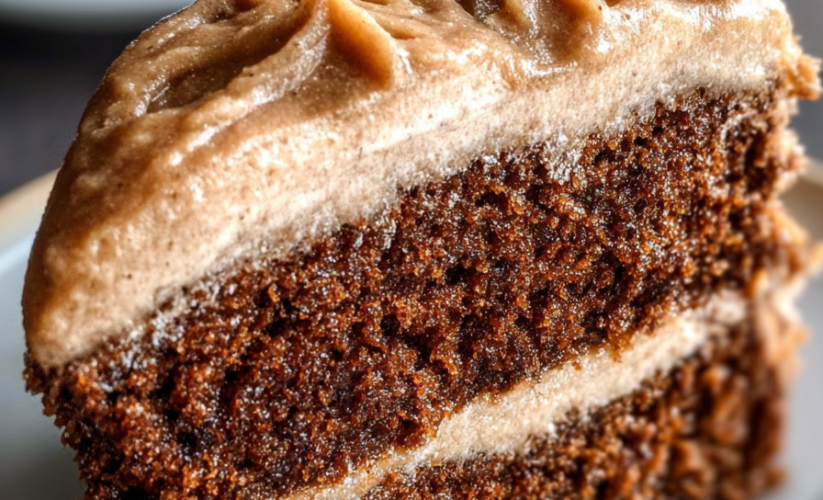
Gingerbread Cake with Cinnamon Molasses Frosting

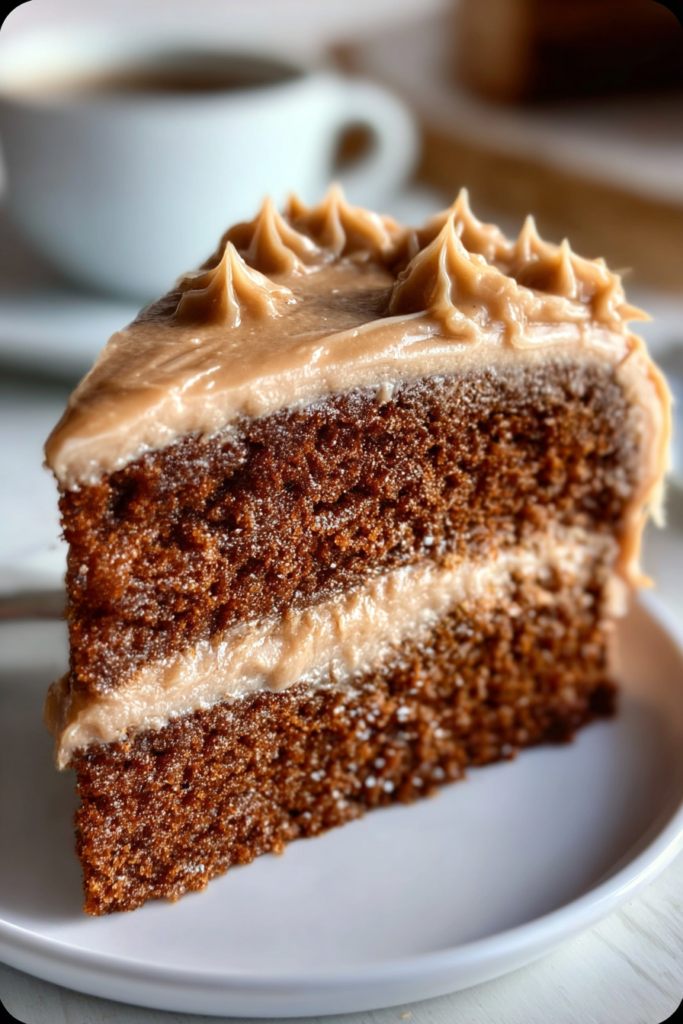
This supremely moist gingerbread cake captures the essence of the holiday season with its deep, warming spices and rich molasses flavor, then elevates it to celebration status with a tangy, sweet cream cheese frosting laced with cinnamon and molasses. The cake’s tender crumb comes from the ingenious combination of melted butter and hot water that creates steam during baking, while the generous spice blend—ginger, cinnamon, nutmeg, and cloves—fills your kitchen with intoxicating aromas that evoke cozy winter evenings and festive gatherings. Topped with a billowy frosting that balances sweet and tangy while echoing the cake’s spice notes, this dessert is sophisticated enough for holiday parties yet comforting enough for everyday enjoyment.
Why You’ll Love This Recipe
Incredibly moist texture – The combination of molasses, melted butter, and hot water creates a cake so tender and moist it stays fresh for days, avoiding the common pitfall of dry gingerbread that crumbles when you cut it.
One-bowl cake simplicity – Unlike fussy layer cakes requiring multiple bowls and complicated techniques, this gingerbread comes together in two bowls with simple stirring—no mixer required for the cake itself, making cleanup remarkably easy.
Perfect spice balance – The quartet of warm spices—ginger, cinnamon, nutmeg, and cloves—creates complex flavor without any single spice overwhelming the others, resulting in harmonious warmth rather than harsh spiciness.
Cream cheese frosting upgrade – While gingerbread is delicious plain, the tangy cream cheese frosting with molasses and cinnamon transforms this from a simple snack cake into an elegant dessert worthy of special occasions.
Holiday entertaining ready – Baked in a 9×13 pan and frosted right in the pan, this cake serves 12-16 people easily, requires no fancy plating, and looks beautiful simply cut into squares—perfect for potlucks and parties.
Make-ahead friendly – Both the cake and frosting benefit from advance preparation; the cake actually improves in flavor and moisture after 24 hours, while the frosting can be made days ahead and stored in the refrigerator.
Ingredients You’ll Need
For the Gingerbread Cake
2½ cups all-purpose flour – Provides structure; measure by spooning into cups and leveling off for accuracy—scooping directly from the bag can pack in too much flour, resulting in dry, dense cake
1 cup brown sugar – Dark or light brown sugar both work; the molasses in brown sugar reinforces the gingerbread flavor while adding moisture and producing the characteristic dark color and chewy texture
1 cup molasses – The star ingredient providing distinctive deep, bittersweet flavor and dark mahogany color; use unsulphured molasses (not blackstrap, which is too bitter) for best results
½ cup butter, melted – Unsalted butter allows better control of saltiness; melting rather than creaming simplifies mixing and contributes to the cake’s moist, dense crumb
1 cup hot water – Creates steam during baking that keeps the cake exceptionally moist; the heat also helps dissolve sugar and blend ingredients more smoothly
1 large egg – Binds ingredients together and provides structure, richness, and tender texture; room temperature egg incorporates more easily than cold
2 teaspoons ground ginger – The signature spice providing warm, slightly peppery heat; use fresh, potent ground ginger for best flavor—old spices lose their punch
1½ teaspoons cinnamon – Adds sweet warmth and familiar comfort; complements rather than competes with the ginger, creating layered spice complexity
½ teaspoon nutmeg – Contributes subtle sweetness and aromatic warmth; freshly grated nutmeg offers superior flavor but pre-ground works well
½ teaspoon cloves – Provides aromatic, slightly bitter depth; use sparingly as cloves can easily overpower—this amount adds complexity without dominating
1 teaspoon baking soda – The primary leavening agent that reacts with molasses’s acidity to create rise and tender crumb; don’t substitute baking powder as the reaction differs
½ teaspoon salt – Essential for enhancing all flavors and balancing the sweetness; kosher salt or fine sea salt work equally well
For the Cinnamon Molasses Frosting
8 oz cream cheese, softened – Full-fat cream cheese at room temperature (leave out 2-3 hours) ensures smooth, lump-free frosting with tangy richness that cuts through sweetness
½ cup unsalted butter, softened – Must be room temperature (not melted) for proper creaming; contributes richness and helps create smooth, spreadable consistency
2 cups powdered sugar – Also called confectioners’ sugar; provides sweetness and structure without graininess—sift if lumpy for smoothest results
1 tablespoon molasses – Echoes the cake’s flavor and adds subtle depth; just enough to reinforce the gingerbread character without making frosting too dark or strong
1 teaspoon cinnamon – Ties frosting flavor to the spiced cake; use quality cinnamon (Ceylon or Vietnamese) for best flavor complexity
1 teaspoon vanilla extract – Pure vanilla extract adds warmth and rounds out flavors; the vanilla-cinnamon combination creates familiar comfort
Step-by-Step Instructions
Preheat oven and prepare pan Set your oven to 350°F (175°C) and position the rack in the center for even heat distribution. Thoroughly grease a 9×13-inch baking pan with butter or cooking spray, ensuring you coat the corners and sides—for extra insurance against sticking, you can also line the bottom with parchment paper.
Combine dry ingredients In a medium mixing bowl, whisk together the 2½ cups flour, 2 teaspoons ground ginger, 1½ teaspoons cinnamon, ½ teaspoon nutmeg, ½ teaspoon cloves, 1 teaspoon baking soda, and ½ teaspoon salt. Whisk thoroughly for 30-45 seconds to ensure the spices and leavening are evenly distributed throughout the flour—this prevents pockets of concentrated spice or uneven rising.
Mix wet ingredients In a large mixing bowl, combine the ½ cup melted butter (cooled slightly so it doesn’t cook the egg), 1 cup brown sugar, 1 large egg, 1 cup molasses, and 1 cup hot water. Whisk vigorously for 1-2 minutes until the mixture is completely smooth and the brown sugar has dissolved—the batter should be glossy and uniform with no streaks of unmixed ingredients.
Combine wet and dry Pour the dry ingredient mixture into the bowl with the wet ingredients. Using a wooden spoon or rubber spatula, stir gently just until the flour disappears and no dry pockets remain—mix for about 20-30 seconds with broad, sweeping motions. The batter will be very thin and pourable, almost like pancake batter—this is correct and contributes to the moist final texture. Don’t overmix; a few tiny lumps are fine and will disappear during baking.
Bake the cake Pour the batter into your prepared 9×13-inch pan—it will be quite liquid, so pour slowly to avoid splashing. Transfer to the preheated oven and bake for 30-35 minutes, checking at 30 minutes. The cake is done when a toothpick inserted into the center comes out clean or with just a few moist crumbs (not wet batter), the edges have pulled slightly away from the pan sides, and the top springs back when lightly pressed.
Cool completely Remove the cake from the oven and place the pan on a wire cooling rack. Let the cake cool in the pan for 15 minutes, then allow it to cool completely to room temperature before frosting—this takes 1-2 hours. Frosting a warm cake will cause the cream cheese frosting to melt and slide off, creating a mess rather than a beautiful finish.
Make the frosting While the cake cools (or in advance), prepare the frosting. In a large bowl using an electric mixer on medium speed, beat the 8 oz softened cream cheese and ½ cup softened butter together for 2-3 minutes until light, fluffy, and completely smooth with no lumps. Scrape down the bowl sides midway to ensure even mixing.
Add frosting flavorings To the cream cheese mixture, add the 2 cups powdered sugar, 1 tablespoon molasses, 1 teaspoon vanilla extract, and 1 teaspoon cinnamon. Beat on low speed initially to prevent a powdered sugar cloud, then increase to medium-high and beat for 2-3 minutes until the frosting is smooth, fluffy, and completely incorporated—it should be light and spreadable with no graininess.
Frost the cake Once the cake is completely cool to the touch, use an offset spatula or butter knife to spread the frosting evenly over the top of the cake, working from the center outward. Create decorative swirls if desired, or smooth it into a flat, even layer. For cleanest cuts, refrigerate the frosted cake for 20-30 minutes to firm up the frosting before slicing.
Serve and enjoy Cut the cake into 12-16 squares depending on desired portion size. For the neatest slices, wipe your knife clean between cuts. Serve at room temperature for best flavor and texture, or slightly chilled if you prefer firmer frosting.
Recipe Notes & Tips
Molasses matters – Use unsulphured molasses (labeled “mild” or “original”), not blackstrap molasses which is too bitter and intense for baking; robust (dark) molasses offers deeper flavor than mild if you prefer stronger gingerbread taste.
Don’t overmix the batter – Stir just until flour disappears; overmixing develops gluten and creates tough, dense cake with tunnels—the batter should be lumpy and you should stop mixing while you can still see a few flour streaks.
Hot water secret – The hot water activates the spices and dissolves the sugar while creating steam during baking that keeps the cake incredibly moist; don’t substitute cold or room temperature water as the results won’t be the same.
Room temperature dairy – Cream cheese and butter must be truly softened (not melted) for smooth frosting; plan ahead by leaving them at room temperature for 2-3 hours, or cut into small pieces to speed softening to 30-45 minutes.
Make-ahead strategy – Bake the cake up to 2 days ahead, wrap tightly in plastic wrap, and store at room temperature; make frosting up to 3 days ahead and refrigerate, then bring to room temperature and re-whip before spreading.
Storage instructions – Store frosted cake covered in the refrigerator for up to 5 days; bring to room temperature for 30 minutes before serving for best flavor, or serve cold if you prefer firmer texture.
Nutritional Information
Prep Time: 15 minutes
Cook Time: 30-35 minutes
Total Time: 45-50 minutes (plus 2 hours cooling time)
Servings: 12-16 squares (9×13 pan typically yields 12 large or 16 smaller portions)
Calories per serving: Approximately 380-420 kcal per square based on 12 servings (varies with portion size; reducing frosting or using reduced-fat cream cheese can lower by 60-80 calories per serving)
Perfect Pairings
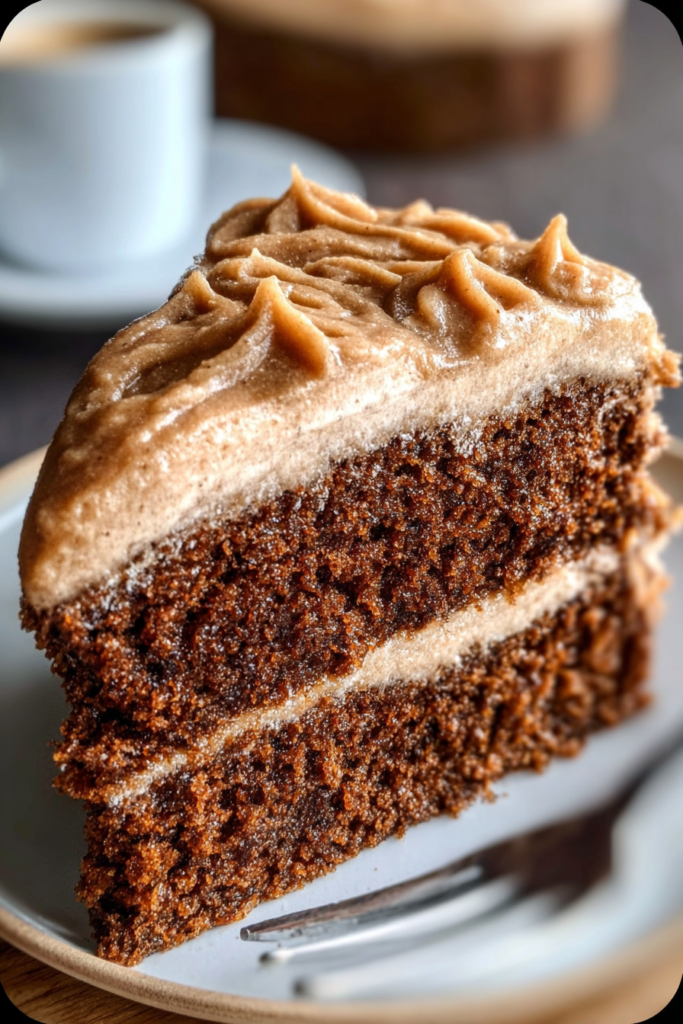
Hot coffee or spiced tea – Strong black coffee or chai tea complement the warm spices beautifully, cutting through the sweet richness while echoing the aromatic notes in both cake and frosting.
Vanilla ice cream or whipped cream – A scoop of cold vanilla ice cream or dollop of lightly sweetened whipped cream provides temperature contrast and adds creamy richness for a more decadent dessert experience.
Warm cider or mulled wine – Hot apple cider or spiced mulled wine share the warming spices of gingerbread, creating harmonious flavor pairing perfect for holiday gatherings.
Fresh berries or pears – Sliced fresh pears, raspberries, or pomegranate seeds add fruity brightness and acidity that balance the cake’s richness and sweetness.
Ideal Occasions
Holiday celebrations and Christmas gatherings – The warm spices and festive appearance make this perfect for Thanksgiving, Christmas, Hanukkah, or any winter holiday celebration where traditional flavors are appreciated.
Office parties and potlucks – Bakes and travels in the same pan, serves many people easily, and cuts into neat squares that are easy to serve and eat without plates if necessary.
Cozy winter weekends – When you crave something warming and comforting on a cold afternoon, this cake fills your home with inviting aromas while delivering the soul-satisfying comfort only spice cake can provide.
Hostess gift or food gift – Baked in a disposable aluminum pan and beautifully wrapped, this makes an impressive, thoughtful gift that recipients can enjoy immediately or freeze for later.
Storage & Serving Tips
Room temperature holding – Unfrosted gingerbread can sit at room temperature, tightly wrapped, for up to 3 days; once frosted with cream cheese frosting, refrigerate after 2-3 hours at room temperature to prevent food safety issues.
Refrigerator storage – Store frosted cake covered tightly in the refrigerator for up to 5 days; the frosting firms up when cold but softens quickly at room temperature, and the cake actually improves in moisture and flavor over the first 2 days.
Freezing instructions – Freeze unfrosted cake wrapped tightly in plastic then foil for up to 3 months; thaw overnight at room temperature, then frost before serving—frosted cake can also freeze but frosting texture may change slightly upon thawing.
Serving temperature – For best flavor, remove refrigerated cake 30 minutes before serving to bring to room temperature; the spices taste more pronounced and the texture is softer when not cold, though some prefer the firm frosting of chilled cake.
Creative Variations to Try
Pumpkin gingerbread – Replace ½ cup of the molasses with pumpkin puree for moister, lighter-colored cake with subtle pumpkin flavor that complements the ginger and spices beautifully.
Chocolate gingerbread – Add ½ cup cocoa powder to the dry ingredients (reduce flour by ½ cup) for rich, dark chocolate-ginger flavor combination that’s sophisticated and unexpected.
Lemon cream cheese frosting – Replace molasses and cinnamon in frosting with 2 tablespoons lemon juice and 1 tablespoon lemon zest for bright, tangy contrast to the warm spices.
Maple cream cheese frosting – Substitute pure maple syrup for molasses in the frosting and add ½ teaspoon maple extract for autumn-inspired flavor that’s slightly less intense than molasses.
Troubleshooting Common Issues
Cake is too dense or heavy – Too much flour was added (measure by spooning, not scooping) or batter was overmixed; next time, measure carefully and stir gently just until flour disappears.
Cake sank in the middle – Oven temperature too low, underbaked, or oven door opened too early; use an oven thermometer to verify temperature, bake the full time, and avoid opening the door for the first 25 minutes.
Frosting is too soft or runny – Cream cheese or butter wasn’t cold enough from refrigerator, or powdered sugar quantity was insufficient; refrigerate frosting for 20-30 minutes to firm up, or add more powdered sugar ¼ cup at a time.
Frosting is lumpy – Cream cheese or butter wasn’t properly softened; always allow dairy to come to true room temperature, and beat for the full 2-3 minutes before adding other ingredients to ensure smoothness.
Why This Recipe Works
Gingerbread Cake with Cinnamon Molasses Frosting succeeds through the careful balance of moisture-rich ingredients and warm spices that create both tender texture and complex flavor. Molasses serves triple duty as the primary flavor source, a moisture contributor, and the acidic component that reacts with baking soda to provide leavening—this reaction produces carbon dioxide bubbles that lighten the batter while the acidity tenderizes the gluten structure. Brown sugar reinforces the molasses flavor while contributing additional moisture through its hygroscopic properties (attracting and holding water molecules), resulting in cake that stays moist for days rather than drying out overnight. The melted butter method, rather than traditional creaming, creates a more tender, melt-in-your-mouth crumb because melted fat coats flour proteins more efficiently, inhibiting gluten development that would create tougher texture. Hot water serves multiple scientific purposes: it dissolves sugar more completely than cold water, it blooms the ground spices (releasing their essential oils and intensifying flavor), and most importantly, it creates steam during baking that keeps the crumb structure open and moist. The quartet of warm spices—ginger, cinnamon, nutmeg, and cloves—creates layered complexity because each contains different aromatic compounds: ginger provides zingerone (peppery warmth), cinnamon contributes cinnamaldehyde (sweet spice), nutmeg offers myristicin (warm, nutty notes), and cloves add eugenol (slightly bitter, medicinal depth). Together they create synergistic flavor greater than any single spice could provide. The thin batter consistency is intentional—it allows the cake to spread evenly in the pan and creates a fine, tender crumb rather than coarse, bread-like texture. Baking soda rather than baking powder is essential because it needs the molasses’s acidity to activate; baking powder contains its own acid and wouldn’t react as effectively with this batter. The cream cheese frosting provides not just topping but flavor and textural contrast—its tangy character from lactic acid cultures cuts through the cake’s sweetness and richness, while its creamy, slightly dense texture contrasts with the soft, moist cake. Beating cream cheese and butter together before adding sugar creates stable emulsion where fat is evenly distributed, preventing graininess or separation. The small amount of molasses in the frosting creates flavor echo that ties it to the cake without overwhelming the tangy cream cheese character. Room temperature dairy is crucial for frosting—cold cream cheese won’t beat smooth and will create lumps, while too-soft or melted butter creates runny frosting that won’t hold its shape. At approximately 380-420 calories per serving based on 12 servings, this cake is indulgent but appropriate for special occasions, providing approximately 5-6g protein, 50-55g carbohydrates primarily from sugars and flour, and 18-22g fat from butter and cream cheese.
Final Thoughts
Gingerbread Cake with Cinnamon Molasses Frosting represents the best of holiday baking traditions—deeply flavored, aromatic, and comforting while being surprisingly simple to prepare and reliably successful even for novice bakers. This recipe proves that impressive desserts don’t require complicated techniques or expensive ingredients; sometimes the most memorable results come from thoughtfully combining quality basics and allowing traditional flavors to shine. The make-ahead friendly nature and excellent keeping qualities mean you can prepare this cake when it’s convenient for you, then serve it when your schedule demands—eliminating the stress of last-minute baking while ensuring fresh-tasting results. While the calorie count of 380-420 per serving is substantial for dessert, remember that this is celebration food meant for special occasions when indulgence is appropriate and welcome. For those watching calories, you can reduce each serving to approximately 280-320 calories by using reduced-fat cream cheese in the frosting, cutting the frosting recipe in half for a thinner layer, and serving smaller portions—the bold flavors mean smaller servings still provide plenty of satisfaction. The versatility allows you to serve this as casual snack cake, elegant plated dessert with ice cream and sauce, or portable potluck contribution, ensuring it adapts to whatever occasion arises rather than limiting you to formal presentations. Whether you’re honoring family traditions, creating new holiday memories, welcoming guests with the intoxicating aroma of warm spices, or simply treating yourself to the comfort only gingerbread can provide, this cake delivers the perfect combination of nostalgia and deliciousness—proving once again that some of the best recipes are those that nourish both body and soul, creating moments of sweetness that last far longer than the cake itself.