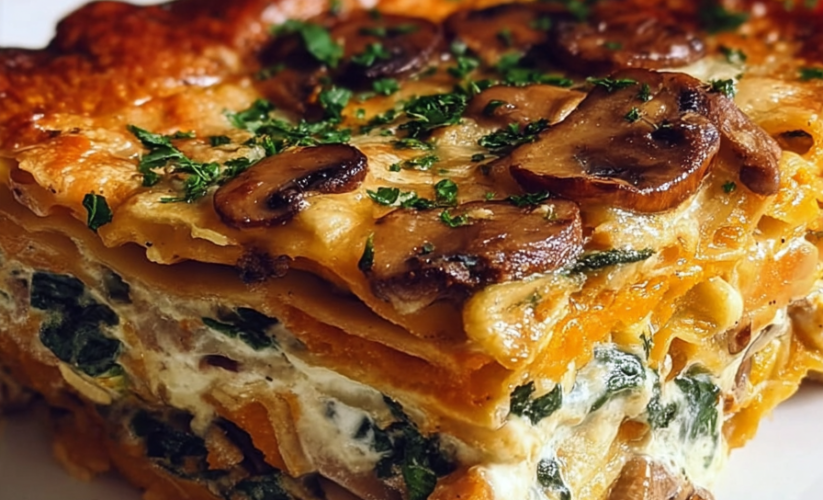
Invisible Butternut Squash, Spinach + Mushroom Lasagna

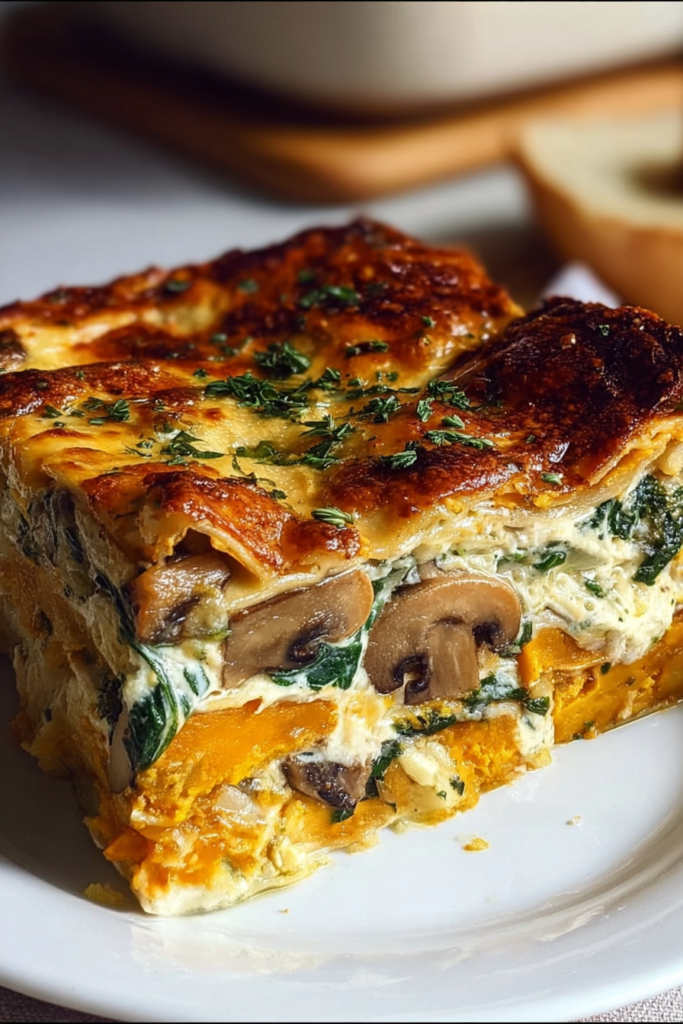
This innovative lasagna reimagines the classic Italian comfort dish by replacing traditional pasta noodles with paper-thin slices of butternut squash that virtually disappear into the creamy, veggie-packed layers. The genius of this recipe lies in its batter-based approach, where eggs, flour, and luxurious Boursin cheese create a custard-like binding that transforms humble vegetables into a cohesive, lasagna-like structure that slices beautifully. With sautéed mushrooms adding earthy depth, wilted spinach contributing nutrients and color, and a golden cheese topping providing that irresistible bubbly finish, this dish proves that vegetable-forward cooking can be just as indulgent and satisfying as any traditional lasagna while sneaking in impressive amounts of nutrition.
Why You’ll Love This Recipe
Hidden veggie powerhouse – This lasagna is a brilliant solution for getting picky eaters—especially children—to consume significant amounts of vegetables without complaint, as the butternut squash essentially melts into the creamy layers and becomes undetectable to suspicious palates.
Lower carb alternative – By replacing pasta noodles with thinly sliced butternut squash, this recipe significantly reduces the carbohydrate content compared to traditional lasagna while increasing fiber, vitamins A and C, and overall nutritional density.
One-bowl wonder – Unlike conventional lasagna that requires cooking noodles separately, preparing multiple sauces, and juggling numerous pots and bowls, this recipe combines almost everything in a single large bowl for remarkably simple preparation and minimal cleanup.
Luxurious yet wholesome – The Boursin cheese (a creamy, herb-infused French cheese) adds restaurant-quality richness and sophisticated flavor without requiring you to make a complicated béchamel sauce from scratch.
Make-ahead friendly – This lasagna actually improves in flavor when made a day ahead, as the ingredients meld together overnight, and it reheats beautifully, making it perfect for meal prep or stress-free entertaining.
Vegetarian crowd-pleaser – Even devoted meat-eaters won’t miss protein in this deeply satisfying dish thanks to the substantial texture from mushrooms, the richness from cheese and eggs, and the naturally sweet, hearty character of roasted squash.
Ingredients You’ll Need
For Sautéing the Vegetables
2 tablespoons olive oil (divided) – Provides fat for sautéing vegetables and preventing sticking; dividing between spinach and mushrooms ensures each cooks properly without overcrowding the pan
5 oz baby spinach, roughly chopped – Fresh baby spinach wilts down dramatically (from 5 oz to about 1/2 cup cooked), contributing iron, vitamins, and vibrant green color throughout the lasagna
20 oz baby bella mushrooms, sliced – Also called cremini mushrooms, these provide meaty texture and umami depth; slicing allows them to release moisture and caramelize beautifully during sautéing
For the Butternut Squash Base
1½ lbs butternut squash – The star ingredient that replaces pasta noodles; when sliced paper-thin and baked in the custard mixture, it becomes tender and almost invisible, blending seamlessly into the dish
For the Creamy Custard Binder
5 oz Boursin cheese, at room temperature – This soft, spreadable cheese infused with garlic and herbs creates luxurious creaminess and sophisticated flavor; room temperature ensures smooth mixing without lumps
2 large eggs – Act as the primary binding agent, creating a custard that holds all the vegetables together while adding protein and richness
⅓ cup milk – Thins the mixture to proper consistency for coating vegetables; whole milk provides best flavor, but any milk (including non-dairy) works
⅓ cup all-purpose flour – Provides structure and helps the custard set during baking, preventing the lasagna from being watery or falling apart when sliced
1 teaspoon baking powder – Creates slight lift and airiness in the custard, preventing it from becoming too dense or heavy
For Seasoning
½ teaspoon salt – Essential for enhancing all flavors; adjust based on the saltiness of your Boursin cheese, which can vary by brand
½ teaspoon garlic powder – Reinforces the garlic notes in the Boursin cheese and adds savory depth throughout the dish
½ teaspoon onion powder – Contributes sweet, aromatic background flavor that complements both the squash’s natural sweetness and the mushrooms’ earthiness
⅛ teaspoon ground nutmeg – A classic pairing with butternut squash and spinach, nutmeg adds warm, slightly sweet spice that elevates the entire dish
3 tablespoons fresh parsley, minced – Provides fresh, herbaceous brightness that cuts through the richness and adds flecks of green color
For the Cheese Topping
1 cup shredded mozzarella cheese – Melts beautifully to create that classic lasagna-style stretchy, golden top layer that everyone loves
2 tablespoons grated Parmesan cheese – Adds nutty, salty complexity and helps the top brown more deeply during baking
Step-by-Step Instructions
Preheat and prepare baking dish Set your oven to 400°F (200°C) and lightly spray a 9×13-inch baking dish with olive oil or cooking spray, ensuring you coat the corners and sides thoroughly to prevent sticking when serving. Position the oven rack in the center for even heat distribution.
Sauté the spinach Heat 1 teaspoon of olive oil in a large skillet over medium heat. Add the roughly chopped baby spinach and sauté for just 1-2 minutes, stirring frequently, until the leaves wilt and turn bright green but before they release too much liquid. Transfer the wilted spinach to a plate and set aside—don’t worry about draining it completely as some moisture is fine.
Cook the mushrooms In the same skillet, add the remaining olive oil (about 1 tablespoon plus 2 teaspoons) and increase heat to medium-high. Add the sliced baby bella mushrooms in an even layer and let them cook undisturbed for 2-3 minutes to develop golden-brown caramelization on one side. Stir and continue cooking for another 2-3 minutes until the mushrooms have released their moisture, it has evaporated, and they’re deeply golden. Transfer to the plate with the spinach.
Prepare the butternut squash Carefully peel the butternut squash using a sharp vegetable peeler or knife, removing all the tough outer skin. Cut off both ends, then slice the squash in half lengthwise. Scoop out and discard the seeds and stringy flesh from the bulbous bottom section. Using a handheld mandoline slicer or very sharp knife, carefully slice the squash into thin, uniform pieces approximately ⅛ to ¼ inch thick—consistency is key for even cooking.
Create the creamy custard mixture In an extra-large mixing bowl (the mixture will be voluminous once vegetables are added), combine the room-temperature Boursin cheese, eggs, and milk. Whisk vigorously for 1-2 minutes until the mixture is completely smooth, creamy, and no cheese lumps remain—the Boursin should be fully incorporated into a cohesive base.
Add dry ingredients and seasonings To the cheese mixture, add the flour, baking powder, salt, garlic powder, onion powder, and ground nutmeg. Whisk thoroughly until the flour is completely incorporated with no dry pockets or lumps remaining—the mixture should resemble a thick, smooth batter similar to pancake batter.
Fold in all vegetables Add the minced parsley, wilted spinach (roughly chop it again if the pieces are large), sautéed mushrooms, and all the thinly sliced butternut squash to the bowl. Using a large spatula or wooden spoon, gently fold everything together, turning the mixture over itself repeatedly until every vegetable piece is evenly coated with the creamy batter—this folding motion is gentler than stirring and helps keep the delicate squash slices intact.
Transfer to baking dish Pour and scrape the entire mixture into your prepared 9×13-inch baking dish, using a spatula to spread it evenly to the edges and smooth the top. Gently press down any vegetables that are sticking up to ensure even baking and prevent them from drying out or burning.
Add cheese topping Evenly sprinkle the shredded mozzarella cheese over the entire surface, followed by the grated Parmesan cheese, ensuring complete coverage from edge to edge for that irresistible golden, bubbly top layer.
Bake to golden perfection Place the baking dish in the preheated oven and bake for 40-45 minutes, checking at the 40-minute mark. The lasagna is done when the top is deeply golden brown with bubbling edges, the cheese is melted and slightly crispy in spots, and a knife inserted into the center comes out clean or with just a bit of melted cheese clinging to it—the custard should be fully set, not jiggly.
Rest before serving Remove from the oven and let the lasagna rest for 10 minutes before cutting. This crucial resting period allows the custard to firm up completely, the layers to settle, and makes slicing into clean squares much easier—cutting too soon results in a messy, runny presentation that doesn’t hold its shape on the plate.
Recipe Notes & Tips
Mandoline safety – When using a mandoline to slice the butternut squash, always use the hand guard and work slowly; the tool is extremely sharp and a moment of inattention can cause serious injury—if you’re uncomfortable with a mandoline, a sharp knife works fine, just aim for consistent thinness.
Boursin cheese alternatives – If you can’t find Boursin, substitute with 5 oz cream cheese mixed with 1 clove minced fresh garlic, 1 teaspoon dried herbs (like basil, thyme, or Italian seasoning), and a pinch of salt for similar creamy, herbed flavor.
Moisture management – Don’t skip sautéing the spinach and mushrooms before adding them to the batter; this pre-cooking removes excess water that would otherwise make the lasagna watery and prevent the custard from setting properly.
Uniform slicing importance – Try to keep all butternut squash slices the same thickness; inconsistent pieces mean some will be overcooked and mushy while others remain undercooked and crunchy—uniformity ensures everything cooks through perfectly.
Make-ahead strategy – Assemble the entire lasagna (through adding the cheese topping) up to 24 hours before baking, cover tightly with plastic wrap, and refrigerate; when ready to cook, add 5-10 minutes to the baking time since it’s starting cold.
Storage and reheating – Cool completely, then cover and refrigerate for up to 3 days or cut into portions, wrap individually, and freeze for up to 1 month; reheat refrigerated portions in a 350°F oven for 15-20 minutes or microwave for 2-3 minutes until heated through.
Nutritional Information
Prep Time: 20 minutes
Cook Time: 45 minutes
Total Time: 65 minutes (including resting time)
Servings: 6 generous portions (9×13 pan cut into 6 large squares)
Calories per serving: Approximately 350 kcal (based on standard ingredients; using reduced-fat Boursin and less cheese topping can reduce to approximately 280-300 calories per serving)
Perfect Pairings
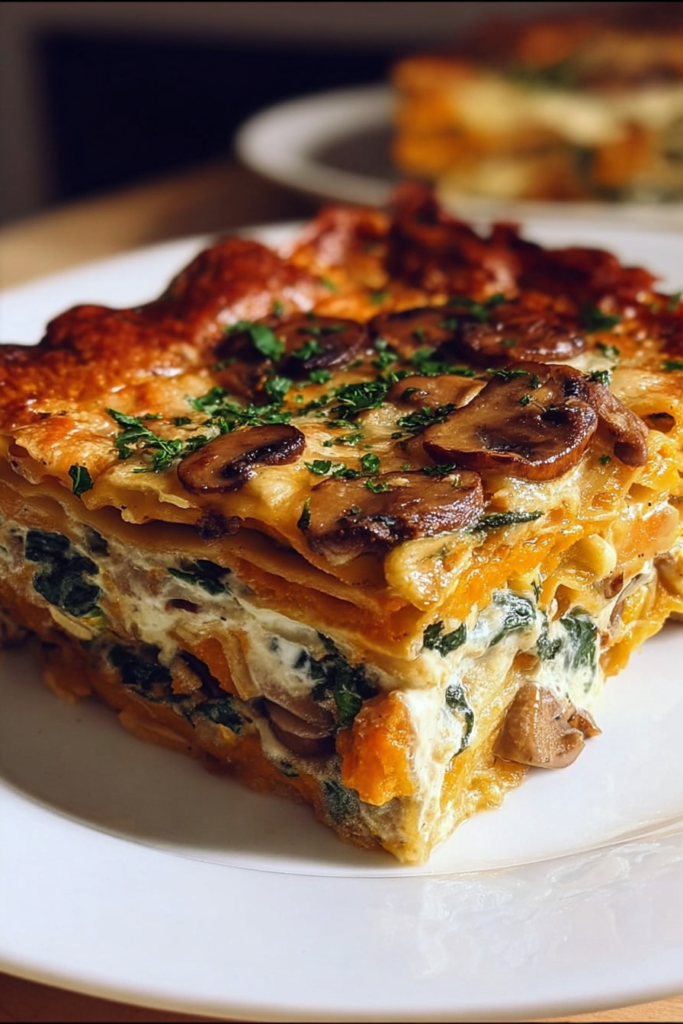
Fresh mixed green salad – A simple salad with crisp lettuce, arugula, or spinach dressed with lemon vinaigrette or balsamic dressing provides refreshing contrast to the rich, creamy lasagna and adds extra vegetables to the meal.
Crusty garlic bread or focaccia – While the lasagna itself is low-carb, serving it with warm, crusty bread allows guests who want traditional carbs to soak up any extra sauce and rounds out the Italian-inspired meal.
Roasted vegetables – Complement the dish with roasted Brussels sprouts, green beans, or asparagus for additional fiber and nutrients while maintaining the vegetable-forward theme of the meal.
Light white wine or sparkling water – A crisp Pinot Grigio or Sauvignon Blanc cuts through the richness beautifully, while sparkling water with lemon provides a refreshing, non-alcoholic option that cleanses the palate between bites.
Ideal Occasions
Weeknight family dinners – Despite its elegant appearance, this lasagna is straightforward enough for Tuesday night when you want something wholesome and satisfying that the whole family will enjoy without complaint.
Vegetarian dinner parties – Serve this to vegetarian and omnivore guests alike as a main course that’s substantial, impressive, and conversation-worthy without anyone missing meat.
Meal prep Sundays – Make this lasagna on the weekend, portion it into containers, and enjoy nutritious, ready-made lunches or dinners throughout the week that reheat beautifully and taste even better on day two.
Holiday gatherings – The beautiful golden top and festive fall colors from the butternut squash make this perfect for Thanksgiving, Christmas, or autumn celebrations as a vegetarian main dish or hearty side.
Storage & Serving Tips
Refrigerator storage – Allow the lasagna to cool completely to room temperature, then cover tightly with plastic wrap or aluminum foil and refrigerate for up to 3-4 days; the flavors actually improve as they meld overnight.
Freezing instructions – Cut cooled lasagna into individual portions, wrap each piece tightly in plastic wrap, then place in freezer-safe bags or containers; freeze for up to 1 month and thaw overnight in refrigerator before reheating.
Reheating methods – For best texture, reheat in a 350°F oven covered with foil for 15-20 minutes until heated through; microwave works for quick reheating (2-3 minutes per portion) but won’t restore the crispy top.
Serving suggestions – Cut into 6 large squares for main-course portions or 8-12 smaller pieces for side dish servings; garnish with fresh parsley, a drizzle of olive oil, or extra Parmesan for elevated presentation.
Creative Variations to Try
Zucchini summer version – Replace butternut squash with thinly sliced zucchini or yellow summer squash for a lighter, lower-calorie version perfect for summer when squash is less available.
Italian sausage addition – For meat-eaters, brown 8 oz Italian sausage (removed from casings) and add it to the vegetable mixture before combining with the custard for extra protein and savory flavor.
Vegan adaptation – Use vegan cream cheese and nutritional yeast instead of Boursin, substitute flax eggs (2 tablespoons ground flaxseed mixed with 6 tablespoons water), use non-dairy milk, and top with vegan mozzarella.
Kale and sun-dried tomato twist – Replace spinach with chopped kale and add ¼ cup chopped sun-dried tomatoes for a more robust, Mediterranean-inspired flavor profile with additional texture.
Troubleshooting Common Issues
Lasagna is too watery – The vegetables weren’t cooked enough to release moisture, or the squash was sliced too thick and released water during baking; next time, ensure vegetables are well-sautéed and squash is sliced paper-thin, and consider draining excess liquid after the 10-minute rest.
Custard didn’t set properly – The ratio of wet to dry ingredients was off, possibly from extra moisture in vegetables; make sure to sauté spinach and mushrooms thoroughly, and don’t add any liquid beyond what’s specified in the recipe.
Squash pieces are crunchy – The slices were too thick or the lasagna was underbaked; ensure uniform ⅛ to ¼ inch slices and bake the full 45 minutes or until a knife easily pierces through the center layers.
Top is too dark before inside is done – Oven temperature runs hot or rack position was too close to top heating element; tent loosely with foil after 30 minutes if browning too quickly, and use an oven thermometer to verify accurate temperature.
Why This Recipe Works
This Invisible Butternut Squash, Spinach + Mushroom Lasagna succeeds through clever manipulation of traditional lasagna structure and smart ingredient chemistry. The butternut squash, when sliced thin enough (⅛ to ¼ inch), contains sufficient moisture and natural sugars that it softens completely during the 45-minute bake, essentially dissolving into the custard and becoming imperceptible to even veggie-averse eaters. The eggs and flour create a savory custard (similar to a quiche base) that binds all the vegetables together while baking, transforming from liquid batter into a sliceable, structured dish through protein coagulation and starch gelatinization. Boursin cheese serves triple duty: it provides richness and creaminess without making a separate béchamel sauce, its garlic and herb infusion seasons the entire dish, and its high fat content (about 40%) ensures the custard stays moist and luxurious rather than rubbery. Pre-cooking the spinach and mushrooms is scientifically crucial—spinach is 91% water and mushrooms 92% water, so sautéing evaporates this moisture before it can waterlog the custard during baking. The small amount of baking powder creates tiny air pockets that make the custard lighter and less dense, preventing a heavy, brick-like texture. The nutmeg isn’t just traditional—it contains compounds that enhance perception of sweetness and complement the natural sugars in butternut squash while its warm spice notes balance the earthiness of mushrooms. The 10-minute rest after baking allows the custard’s proteins to firm up as temperature drops slightly, transforming it from a wobbly, hot mess into clean, stackable squares that hold their shape when plated. The mozzarella and Parmesan topping browns through Maillard reactions and caramelization, creating complex savory-sweet flavors while visually mimicking traditional lasagna. At 350 calories per generous serving, this dish provides substantial nutrition—approximately 15-18g protein, 8-10g fiber, over 100% daily vitamin A (from squash and spinach), significant iron and calcium (from spinach and cheese), and numerous B vitamins and minerals, all while being naturally gluten-free friendly if you substitute the flour with a gluten-free blend.
Final Thoughts
Invisible Butternut Squash, Spinach + Mushroom Lasagna represents a brilliant evolution in vegetable-forward cooking—proving that healthy eating doesn’t require sacrifice of comfort, indulgence, or satisfaction. This recipe solves multiple common cooking challenges simultaneously: it’s genuinely nutritious without tasting “healthy,” it’s simple to prepare without multiple pots and complicated steps, it accommodates various dietary preferences (vegetarian, potentially gluten-free, lower-carb than traditional pasta), and most importantly, it tastes absolutely delicious enough that even dedicated veggie-avoiders request seconds. The genius of using butternut squash as an “invisible” pasta replacement means children and picky eaters consume impressive amounts of vegetables without realizing it, making this a stealth health recipe that actually works in real family settings. While 350 calories per serving is moderate, this is a complete meal that requires no additional starch or protein beyond perhaps a simple salad, and the generous portion size means you’re genuinely satisfied without needing seconds. For those watching calories more strictly, you can reduce each serving to approximately 280-300 calories by using reduced-fat Boursin or Neufchâtel cheese, cutting the cheese topping in half, and serving slightly smaller portions—the dish is so nutrient-dense that smaller portions still provide excellent satiety. The make-ahead and freezer-friendly nature means you can invest an hour on Sunday and enjoy healthy, homemade dinners all week with zero additional effort beyond reheating. Whether you’re a committed vegetarian seeking substantial meatless meals, a parent trying to increase family vegetable consumption, or simply someone who loves creative, comforting food that happens to be nutritious, this Invisible Butternut Squash Lasagna delivers on every level—proving once again that the best recipes are those that make you feel good both during the eating and after, nourishing body and soul in equal measure.